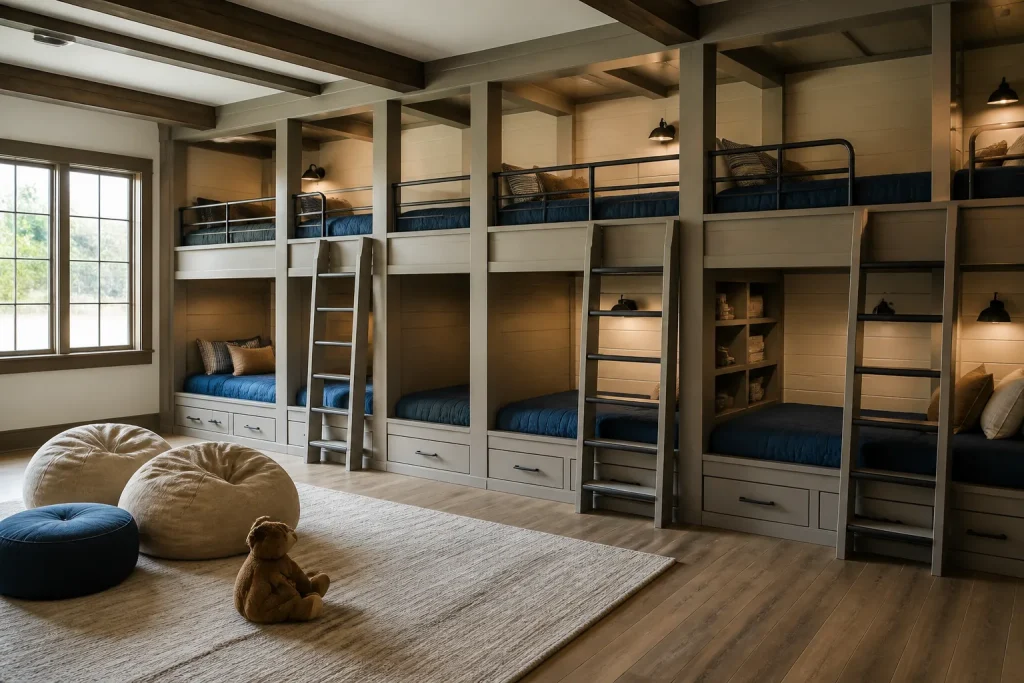
Disclosure: This site may earn a commission if you buy through links on this page or elsewhere on the site. For bunk beds, always check the manufacturer instructions and current safety guidance before building, modifying, or using any bed.
Oversized bunk beds are fun to look at, especially in cabins, hostels, camps, and large vacation rentals. But the bigger the bunk system gets, the more important the basics become: structure, rails, ladders, exits, and inspection.
Instead of chasing a record-size bed, use big bunk examples to understand what matters in any multi-sleeper room.
Table of Contents
Quick Answer
The biggest bunk beds are usually custom-built installations for camps, hostels, rentals, or novelty spaces, not normal furniture you can copy at home. Their useful lesson is that every sleeping platform needs clear access, strong structure, guardrails, safe ladder or stair placement, enough ceiling clearance, and a maintenance plan.
| Big bunk feature | Home-design lesson |
|---|---|
| Many sleeping spots | Plan exits and ladders before style. |
| Tall structure | Ceiling clearance and rail height become critical. |
| Built-in walls | Anchoring and inspection matter. |
| Shared room | Storage and walking paths must stay clear. |
| Novelty design | Do not copy photos without structural plans. |
Why Giant Bunks Are Different
A large custom bunk wall is not just several beds stacked together. It has load paths, supports, access points, rail openings, lighting, ventilation, and emergency considerations.
That is why large bunk rooms should be planned like built-in furniture, not decorated like a normal bedroom after the fact.
Safety Rules Still Scale Up
The CPSC guidance says bunk beds with mattress foundations more than 30 inches above the floor need guardrails, and guardrails must extend at least 5 inches above the top of the mattress. Bigger designs do not get to ignore those basics.
More sleepers also mean more chances for clutter, blocked ladders, and rough use. The design should make the safe path obvious.
- Keep every ladder or stair path clear.
- Use lighting that does not require climbing in the dark.
- Avoid high novelty platforms for young children.
- Keep storage away from exits.
- Inspect fasteners and rails regularly.
What Works in Vacation Homes and Cabins
The best large bunk rooms usually use built-in lower platforms, sturdy stairs, simple guardrails, and storage below or beside the beds. They avoid narrow ladders in dark corners and avoid making children climb over other sleepers.
If you are designing a rental bunk room, choose durability and easy cleaning over dramatic height.
| Good idea | Avoid |
|---|---|
| Built-in lower bunks | Very tall stacked platforms. |
| Wide stairs with rails | Wobbly removable ladders. |
| Individual reading lights | Loose cords near beds. |
| Under-bed drawers | Storage blocking ladders. |
| Simple bedding | Bulky toppers that reduce rail height. |
When to Hire a Professional
Hire a professional for any built-in bunk wall, unusually tall frame, adult-sized multi-bunk room, wall-mounted structure, or rental property installation. A large bunk is not the place to guess on spans and fasteners.
A good plan should include dimensions, materials, fasteners, rail details, ladder or stair details, mattress thickness, and inspection access.
Related Guides
For custom multi-bed planning, read DIY quad bunk bed planning. For room clearance, see bunks under sloped ceilings.
FAQ
Can I build a giant bunk bed at home?
Only with a real plan and appropriate skills. Large or built-in bunk systems should be reviewed by a qualified professional.
Are big bunk rooms good for rentals?
They can be, but durability, safe access, lighting, clear rules, and easy inspection matter more than novelty.
What is the main lesson from oversized bunk beds?
Scale makes the basics more important: structure, guardrails, ladders, clear paths, mattress fit, and maintenance.