Disclosure: This site may earn a commission if you buy through links on this page or elsewhere on the site. Always check the manufacturer instructions and current safety guidance before buying, building, modifying, or using bunk beds or loft beds.
A twin size mattress for a bunk bed is not just about matching the listed width and length. You also need to check thickness, how the mattress sits inside the guardrails, and whether the bed frame is designed for the mattress type you plan to use. A mattress that is the right footprint but too thick can reduce rail protection and change how safely a sleeper uses the top bunk.
The safest starting point is the bed’s own label or manufacturer instructions. Those documents usually state the maximum mattress thickness, mattress type, and any support requirements. If the label is missing or unclear, measure the sleeping platform and guardrails carefully, then choose a mattress that leaves enough side rail height above the sleep surface and fits the frame without forcing it into place.
Table of Contents
Quick Answer
For a bunk bed, a twin mattress should match the bed’s listed footprint and stay within the maximum thickness on the label. The key checks are length, width, guardrail clearance, and whether the frame needs slats, a bunkie board, or another support system.
| Decision | Practical guidance |
|---|---|
| Footprint | A standard twin mattress is 38 inches wide by 75 inches long. Confirm the bed is built for standard twin, not twin XL or another size. |
| Thickness | Use the maximum thickness listed on the bunk bed label. Thicker mattresses can reduce guardrail height and increase fall risk on the top bunk. |
| Guardrail clearance | After the mattress is in place, the top of the mattress should sit low enough that the rails still do their job. Follow the bed maker’s minimum rail guidance if provided. |
| Support | Check whether the bed uses slats, a platform, or requires a bunkie board. Do not assume a mattress can replace missing support. |
| Verification | Match the mattress to the frame label, then recheck measurements before opening the package if possible. Keep the model number and instructions for reference. |
1. Start with the bed label, not the mattress tag
The most important reference for a bunk bed mattress purchase is the label or instruction sheet attached to the bed frame. That label should identify the intended mattress size and may also state a maximum mattress thickness. If the bed is designed for a twin mattress, it usually means a standard twin footprint rather than a twin XL or custom cut mattress.
If the label says standard twin, use that as the baseline. If it says twin XL, the mattress needs to be 80 inches long instead of 75. A mattress that is too long can overhang the frame or interfere with guardrails and end rails. A mattress that is too wide can fit poorly and shift during use.
- Check the label for mattress size, maximum thickness, and any support instructions.
- Save the assembly manual and product page screenshot if you bought the bed online.
- If the label is missing, contact the manufacturer before guessing.
2. Confirm the footprint: twin means 38 by 75 inches
A standard twin mattress measures about 38 inches wide and 75 inches long. That footprint is the first fit check for most bunk beds. In real use, however, a mattress can still cause problems if the frame opening is tight, if the rails are unusually shaped, or if bedding adds bulk around the edges.
Measure the inside opening of the bunk platform and compare it to the mattress dimensions. You want a mattress that fits flat on the support surface without bowing, hanging over the edge, or scraping the side rails. A small amount of normal manufacturing variation is common, so rely on the bed maker’s stated size first and your own measurements second.
- Standard twin: 38 in. x 75 in.
- Twin XL: 38 in. x 80 in.
- Measure the frame opening, not just the room or the outside of the bed.
What can make a twin mattress fit poorly?
Thick quilting, rounded edges, and nonstandard foam expansion can all affect how a mattress sits in a bunk bed. Even if the listed size is twin, the actual usable footprint may feel slightly larger or smaller. That matters most when the bunk frame has side posts, inset rails, or a tight guardrail opening near the ladder side.
3. Mattress thickness matters as much as length and width
Bunk beds, especially the top bunk, depend on mattress thickness for safety. A mattress that is too tall can raise the sleep surface close to the top rail or above the point the manufacturer intended. That reduces the protective height of the guardrails and can make the bed harder to use safely.
Use the maximum thickness stated by the bunk bed maker. If the bed label does not give a thickness limit, be conservative and choose a thinner mattress rather than a bulky one. Many bunk beds work best with a low-profile mattress, but the right choice still depends on the specific frame, rail design, and sleeper age or size.
- A thicker mattress is not automatically better for a bunk bed.
- Top bunk mattresses should leave clear guardrail coverage above the sleep surface.
- Do not stack a mattress on an extra pad unless the manufacturer allows it.
4. Check guardrail clearance after the mattress is installed
Guardrails are only effective if they extend high enough above the mattress surface. Once the mattress is placed on the bunk, measure from the top of the sleep surface to the top of the guardrail. The exact clearance needed depends on the bed’s design and instructions, but the general goal is to keep enough rail height exposed after sheets and bedding are added.
This is especially important for children using the top bunk. A mattress that seems fine in the store can become too tall once it is compressed into the frame and topped with bedding. When in doubt, choose the thinner approved mattress rather than trying to gain comfort with extra cushioning on the top bunk. For more safety-related reading, see our guide to bunk bed weight limits: https://lshapedbunkbed.com/sleep-tight-dont-break-your-bed-the-ultimate-guide-to-bunk-bed-weight-limits/
- Install the mattress before checking rail height.
- Measure again with bedding on the bed if the top bunk will be used regularly.
- Keep pillows, blankets, and toppers modest on the top bunk.
5. Make sure the support system matches the mattress
A bunk bed mattress needs the right support underneath it. Some frames use wood or metal slats, while others use a platform deck or require an additional bunkie board. If the mattress sits on a support system that is too widely spaced or too flexible, the mattress can sag, wear out faster, or feel unstable.
Check the manual for slat spacing, center support, and any restrictions on mattress type. Foam mattresses, innerspring mattresses, and hybrid models can all work in bunk beds, but only if the frame is built to support them. Never place a mattress directly on a bunk frame that is missing slats or a deck unless the manufacturer specifically allows that setup.
- Confirm whether the bed uses slats, a deck, or another support surface.
- Check slat spacing and center support requirements.
- If the frame needs a bunkie board, use the size and thickness the maker recommends.
| Support setup | What to verify |
|---|---|
| Slats | Spacing, fastening method, and center support |
| Platform deck | That the deck is intact and not warped |
| Bunkie board | Correct size, thickness, and approved use with the mattress |
| Metal grid or panel | Weight support and whether a mattress protector is recommended |
6. Verify fit before and after delivery
The easiest way to avoid a bad purchase is to verify the fit in writing before you buy. Compare the mattress dimensions, thickness, and support type against the bunk bed label and product manual. If the bed was purchased online, review the assembly instructions and any mattress warnings before checkout. If you already own the frame, measure the inside opening, rail height, and support surface yourself.
When the mattress arrives, inspect it before full setup if possible. Check that the length and width match the stated size and that the mattress can lie flat without forcing the frame apart. If you notice overhang, excessive compression, or rail coverage that looks too low, stop and reassess before using the bed. Keep the packaging and documentation until you confirm the fit.
- Compare the mattress box label with the bunk bed label.
- Measure the frame opening and support surface.
- Do a final rail-height check after installation.
Practical measurement checklist
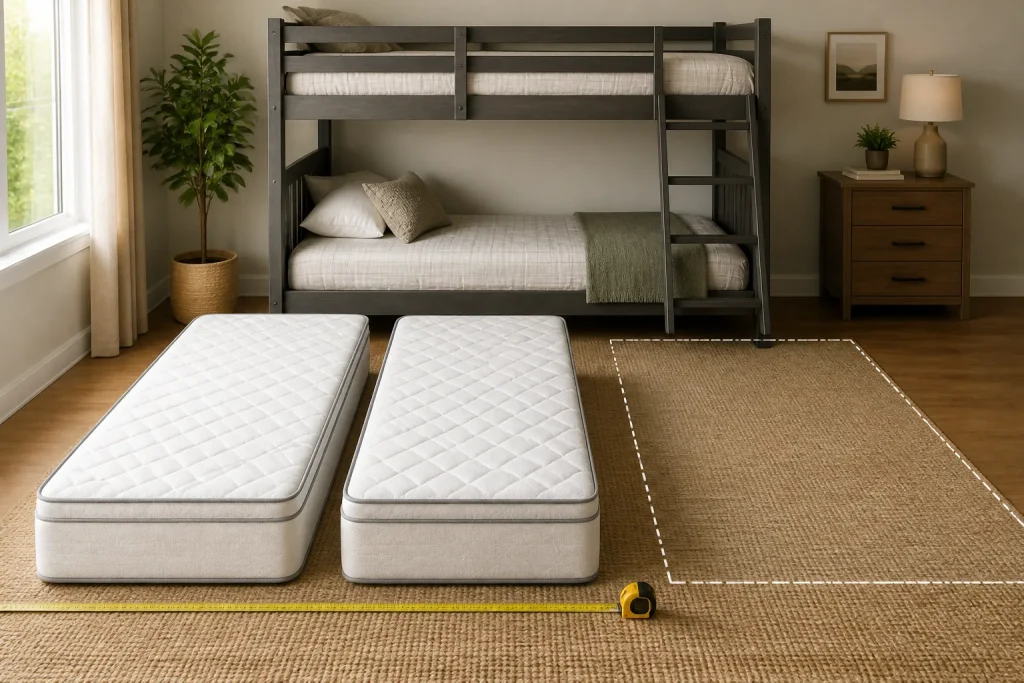
Use a tape measure and record the bed’s inside length, inside width, and distance from the mattress surface to the top of the guardrail. Also note the maximum mattress thickness allowed by the manufacturer. Keep those numbers together so you can compare them with any mattress listing before buying.
7. Common mistakes to avoid with bunk bed mattresses
One common mistake is buying by size name alone. A twin mattress is not always safe for a twin bunk bed if it is too thick or uses a construction that the frame does not support well. Another mistake is adding a mattress topper after the fact and unintentionally exceeding the thickness limit. On a top bunk, even a small change in height can matter.
A second mistake is assuming all twin mattresses are interchangeable. Some are designed for platform beds, some need more support, and some are thicker than they appear once unpacked. For safer planning and room layout ideas around bunk beds, our bunk bed storage and setup resources can help: https://lshapedbunkbed.com/maximizing-your-space-the-ultimate-guide-to-bunk-bed-storage-solutions/ and https://lshapedbunkbed.com/maximizing-space-and-comfort-the-ultimate-guide-to-l-shaped-twin-beds/
- Do not exceed the bed’s thickness limit with toppers or pads.
- Do not use a twin XL unless the frame is made for it.
- Do not ignore a missing label or damaged rail system.
Related Guides
Keep planning with bunk bed games safety ideas, bunk bed weight limits, DIY quad bunk bed planning.
FAQ
Is a standard twin mattress the same as a bunk bed mattress?
Not always. Many bunk beds use a standard twin mattress, but the frame may require a specific maximum thickness or support type. Always check the bed label and manual.
Can I use a thicker mattress on the top bunk for more comfort?
Only if the manufacturer allows it and the guardrails still extend enough above the mattress surface. If the mattress is too thick, it can reduce top bunk safety.
Do bunk beds need a bunkie board?
Some do and some do not. The support requirement depends on the frame design. Follow the bed maker’s instructions instead of assuming the mattress alone will be enough.
How do I know if my mattress is too big for the bunk bed?
If it overhangs the frame, prevents the mattress from lying flat, or reduces guardrail height below the manufacturer’s guidance, it is too big or too thick for that bed.
What should I check before using a new twin mattress on a bunk bed?
Check the size, thickness, support surface, and guardrail clearance. Then confirm the mattress matches the bed label and the assembly instructions.