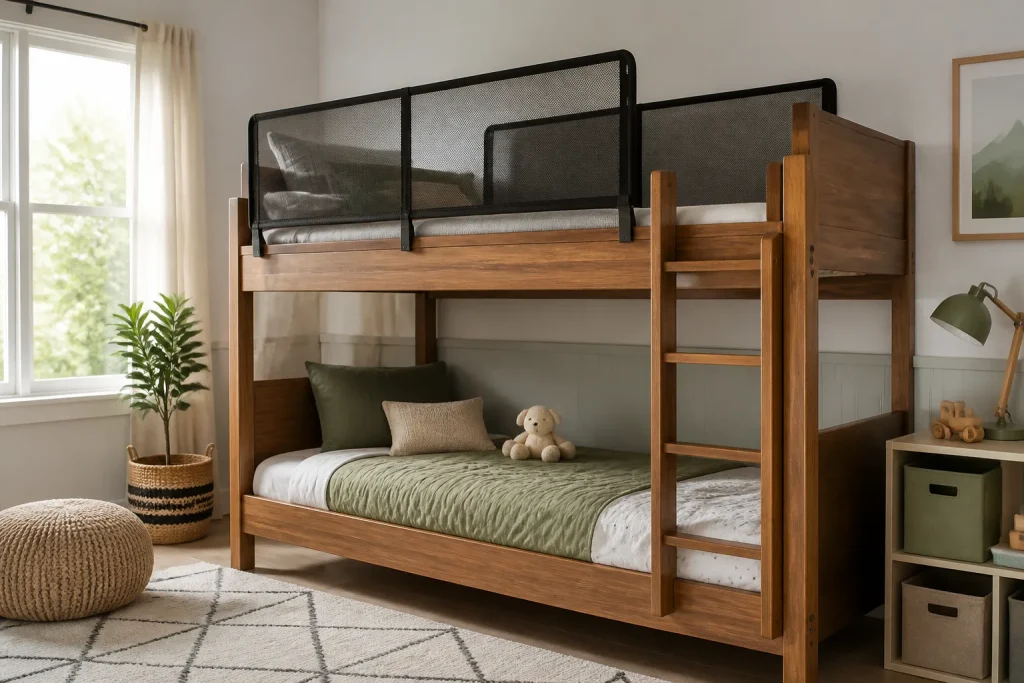
Disclosure: This site may earn a commission if you buy through links on this page or elsewhere on the site. For bunk beds, always check the manufacturer instructions and current safety guidance before building, modifying, or using any bed.
A bunk bed safety net sounds like a simple fix, but it should never be treated as a replacement for proper guardrails, correct mattress height, or manufacturer instructions.
Mesh guards and nets can sometimes help contain soft items or discourage rolling toward an opening, but they can also create entanglement, climbing, or attachment problems if used carelessly.
Table of Contents
Quick Answer
A DIY bunk bed safety net should not replace built-in guardrails. If you use mesh, choose a product designed for beds, keep the ladder clear, attach it exactly as instructed, avoid loose cords, and confirm it does not create gaps or climbing points. If the bed lacks proper guardrails, fix the rail problem first.
| Use | Safety note |
|---|---|
| Keeping pillows from falling | Use only if it does not block the ladder. |
| Replacing a missing rail | Do not do this. Install proper rails. |
| Toddler containment | Top bunks are not appropriate for young children. |
| Decorative netting | Avoid loose fabric, cords, and climbing points. |
| Rental or shared room | Use manufacturer-approved parts when possible. |
Start With the Guardrails
The CPSC guidance says bunk beds with a mattress foundation more than 30 inches above the floor need guardrails, and guardrails must extend at least 5 inches above the top of the mattress. A net does not change that requirement.
If the bed has missing, damaged, or too-low rails, address that before considering mesh accessories.
What a Net Might Help With
A properly designed mesh guard may help keep stuffed animals, pillows, or bedding from sliding through a side opening. It may also make a sleeper feel more enclosed.
The mesh should be taut, purpose-made, and attached without dangling cords. It should not interfere with climbing in and out.
- Use bed-specific products instead of improvised rope or loose fabric.
- Keep all exits and ladders clear.
- Inspect attachments regularly.
- Remove the net if a child tries to climb it.
- Follow the bunk bed manufacturer instructions first.
What a Net Cannot Fix
A safety net cannot make an unsafe bed safe. It cannot correct a mattress that is too thick for the guardrail, a loose ladder, weak frame, missing rail, or large entrapment gap.
If the bed is old, modified, homemade, or missing parts, focus on the structure before adding accessories.
| Problem | Better fix |
|---|---|
| Missing guardrail | Install proper rail or replace the bed. |
| Mattress too thick | Use allowed mattress thickness. |
| Loose ladder | Repair or replace ladder hardware. |
| Large gaps | Stop use until corrected. |
| Child climbing net | Remove accessory and change setup. |
Installation Checklist
Before installation, read both the bed manual and the mesh product instructions. After installation, check the bed from a child’s point of view: can it be climbed, pulled loose, wrapped around a body part, or used to block the ladder?
- No loose cords or loops.
- No blocked ladder opening.
- No sagging mesh.
- No sharp hooks or exposed fasteners.
- No reduced guardrail height.
Related Guides
For rail basics, see bunk bed safety rails. For top bunk use, see safe top bunk storage ideas.
FAQ
Can I use a net instead of a bunk bed rail?
No. A net should not replace proper guardrails or manufacturer-approved parts.
Are decorative canopy nets safe on bunk beds?
Be cautious. Loose fabric and cords can create hazards, especially near ladders and rails.
What if my child climbs the safety net?
Remove it. Anything that becomes a climbing feature can make the bed less safe.