Disclosure: This site may earn a commission if you buy through links on this page or elsewhere on the site. Recommendations should still be checked against your bunk bed manufacturer’s instructions and current safety guidance.
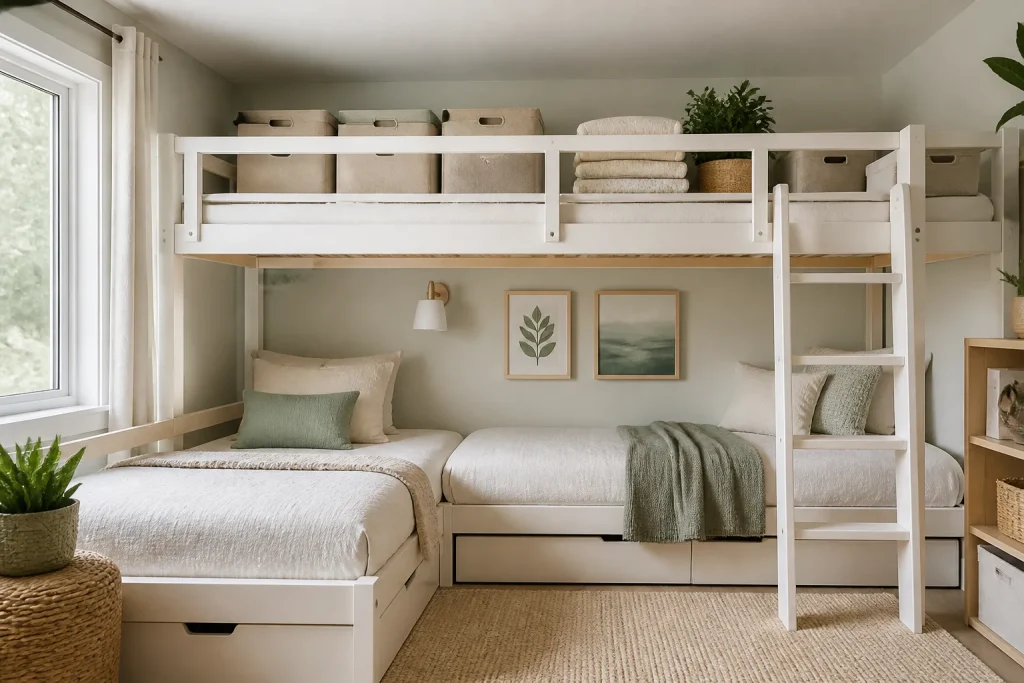
If nobody is sleeping on the upper bunk, the top bunk can become useful storage. The safest approach is to treat it like a light-duty shelf, not an attic. Store soft, light, rarely used items, keep the ladder clear, and do not add weight or hardware that the bed frame was not designed to hold.
For most homes, the best top bunk storage ideas are extra bedding, seasonal clothing in fabric bins, plush toys, guest pillows, and labeled baskets. Avoid heavy boxes, loose items near the guardrail, glass, tools, exercise weights, or anything that could fall on a child or make the bed unstable.
Table of Contents
Quick Answer: What Can You Store on a Top Bunk?
| Good for top bunk storage | Avoid on the top bunk |
|---|---|
| Spare pillows and comforters | Heavy storage totes |
| Seasonal clothes in soft bins | Books stacked near the edge |
| Plush toys and lightweight blankets | Glass, lamps, tools, or sharp objects |
| Empty luggage or soft duffel bags | Anything blocking the ladder |
| Small labeled fabric baskets | Items tied to guardrails or safety rails |
Before You Use the Upper Bunk for Storage
Start with the bed manual. If the manufacturer gives a weight limit for the upper bunk, stay well below it. That limit is normally meant for a sleeper and mattress, not for uneven stacks of boxes. Spread light items evenly across the mattress surface instead of loading one corner.
Also check the guardrails, ladder, slats, and fasteners. The U.S. Consumer Product Safety Commission explains that bunk beds with a mattress foundation more than 30 inches from the floor require guardrails, and guardrails must extend at least 5 inches above the top of the mattress. Storage should never reduce that protection or create gaps where a child could get trapped.
- Do not remove guardrails to make storage easier.
- Do not hang heavy organizers from guardrails unless the manufacturer allows it.
- Do not store anything on the ladder rungs.
- Do not use the upper bunk for storage if a child still climbs or plays on the bed.
Best Top Bunk Storage Ideas
1. Turn the Mattress Area Into a Soft Storage Shelf
The simplest option is to leave the mattress in place and use the bed surface for soft storage. Fold spare comforters, sleeping bags, and extra pillows into clear or fabric bags. This keeps the surface gentle and reduces the chance of a hard item falling.
Use this for bedding that already belongs near the bed: guest blankets, winter duvets, pillow shams, and sleepover supplies. Keep the stack low enough that it sits below the top of the guardrail.
2. Use Fabric Bins Instead of Plastic Totes
Soft-sided bins are better than hard plastic boxes on an upper bunk. They weigh less, are easier to lift down, and are less likely to crack, slide, or hurt someone if they shift. Choose bins with handles so an adult can remove them without leaning awkwardly over the rail.
Label each bin by use, not by vague categories. “Twin sheets,” “winter pajamas,” and “guest pillows” are more useful than “miscellaneous.”
3. Store Seasonal Clothes in Lightweight Bags
Seasonal clothing works well because it is light and not needed every day. Sweaters, costumes, snow pants, swimsuits, and out-of-season pajamas can go into zippered fabric bags. Avoid vacuum bags if they become dense and heavy.
4. Create a Sleepover Kit
If the room is used for guests, keep one sleepover kit on the upper bunk: a spare sheet set, blanket, pillowcase, small towel, and nightlight. Put everything in one labeled duffel or fabric cube so it can be pulled down in one trip.
5. Use the Space for Plush Toys Only
For younger kids’ rooms, the safest storage may be plush toys only. Stuffed animals are light, soft, and visually easy to scan. Keep them in a breathable basket or low fabric bin so they do not spill over the guardrail.
6. Keep a “Memory Bin” for Low-Use Items
A top bunk can hold one lightweight memory bin for baby blankets, school art, or keepsakes. Do not let this become a heavy archive. If the bin becomes difficult to lift with one hand, move it to a closet, under-bed drawer, or lower shelf.
What Not to Store on a Top Bunk
Some items are better kept off the upper bunk entirely. A bunk bed is a sleeping structure first, not a general storage platform.
- Books and textbooks: too heavy and easy to stack near an edge.
- Plastic storage tubs: rigid, heavy when full, and awkward to lift down.
- Electronics: cords, chargers, and batteries add clutter and fall risk.
- Tools, sports gear, or weights: too hard and heavy for an elevated surface.
- Liquids or cleaning products: spill and safety risk.
- Items attached to guardrails: guardrails are safety equipment, not storage rails.
A Safe Setup Checklist
- Confirm nobody will sleep on the upper bunk while it is used for storage.
- Check the manufacturer’s weight limit and stay well below it.
- Keep stored items below the guardrail height.
- Use soft bags, fabric bins, or duffels instead of rigid boxes.
- Leave the ladder and floor around the ladder completely clear.
- Remove items before moving, loosening, or disassembling the bunk bed.
- Re-check bolts, slats, and guardrails after changing how the bed is used.
Better Alternatives if the Top Bunk Feels Unsafe
If you have doubts about the bed’s stability, use lower storage instead. Under-bed drawers, rolling bins under the lower bunk, wall shelves mounted into studs, a wardrobe, or a low bookcase are safer choices for heavy or daily-use items.
For more room-planning ideas, see the site’s guide to using space created by a loft bed and the main L-shaped bed guide.
FAQ
Can I use the top bunk for storage?
Yes, if nobody sleeps there and the items are light, soft, and kept below the guardrail. The safest uses are spare bedding, seasonal clothes, plush toys, and fabric bins.
How much weight can I put on a top bunk?
Use the manufacturer’s published weight limit, then stay comfortably below it because storage weight is often uneven. If you cannot find the manual or weight limit, avoid using the top bunk for anything heavier than soft bedding.
Is it safe to hang organizers from bunk bed rails?
Only use lightweight organizers if the bed manufacturer allows them and they do not interfere with guardrails, ladders, or sleeping space. Do not hang heavy baskets or shelves from safety rails.
Should I remove the mattress before using the upper bunk for storage?
Usually no. Leaving the mattress in place creates a softer, flatter surface and helps prevent bins from catching on slats. If you remove the mattress, make sure stored items cannot fall through or overload the slat system.
Can kids climb up to get stored items?
No. Treat upper bunk storage as adult-access storage. If children need an item every day, store it somewhere lower and easier to reach.
Sources
- U.S. Consumer Product Safety Commission bunk bed guidance
- 16 CFR Part 1513 children’s bunk bed requirements
First Decide Whether Storage Conversion Is Allowed
A top bunk should become storage only if the exact bed manual or manufacturer confirms that use. A label showing a maximum sleeper weight does not automatically approve boxes, shelving, a platform, or a concentrated stack. Storage changes how weight sits on the slats and can alter the way people climb near the frame.
If the manufacturer gives no storage guidance, treat the upper bunk as a sleeping surface and use the lower area, under-bed drawers, or a separate shelving unit instead. Do not remove the mattress foundation, add a plywood deck, or bolt cabinets to guardrails without written model-specific instructions and a professional review.
| Item or change | Default decision | Reason |
|---|---|---|
| Soft blankets in a light bin | Only if the manual allows storage | Lower snag and impact risk, but it still adds load. |
| Books, tools, weights, or glass | Keep off the upper bunk | Dense or sharp items create concentrated and falling hazards. |
| Hooks, ropes, or hanging organizers | Do not add to rails | Can create snagging or entrapment hazards. |
| Bolted shelves or a new deck | Professional design required | Changes structure, fasteners, and load paths. |
| Unapproved mattress removal | Do not assume it is safe | The mattress foundation may be part of the tested configuration. |
Light Top Bunk Storage Ideas That Stay Contained
When a manual permits light storage, use one or two soft, closed containers with a lid that cannot slide toward the edge. Spare comforters, pillows, seasonal clothing, and plush toys are easier to contain than hard boxes. Keep the load distributed over the support surface and leave the guardrails and stair or ladder route completely visible.
Label the containers so nobody has to climb up to search. An adult should retrieve items with both feet on the floor or from an approved access route. Never ask a child to climb a bunk to reach stored items.
- Use soft bins that fit fully inside the frame footprint.
- Keep all items below the guardrail and away from openings.
- Inspect slats, rails, fasteners, and the floor contact before loading anything.
- Keep storage light enough that the bed does not rock or flex.
Do Not Load the Guardrail or Ladder
Guardrails are fall-protection components, not shelves. Avoid baskets hooked over rails, hanging shoe organizers, curtains, cords, and bags. They can change the size of openings, create a snag point, or fall onto someone below. Keep the ladder or stairs clear so the bed can still be exited quickly.
The CPSC rules address guardrail height and openings for bunk beds. Those requirements do not turn an improvised storage attachment into a tested accessory. A safer conversion keeps the original rail and ladder configuration intact.
Safer Alternatives to an Unused Upper Bunk
If the upper bunk is unused, measure the floor area for a low bookcase, rolling under-bed bins, a wardrobe, or a separate shelf. These options keep retrieval at floor level and do not put storage weight into a sleeping structure. If you want to remove or separate the upper bunk, follow the manufacturer’s instructions; the lower frame may rely on parts of the original assembly for stability.
For a built-in conversion, have a qualified carpenter or engineer review the design, including anchoring, floor load, guardrail removal, wall attachment, fire egress, and the future use of the room. A clean-looking storage wall is still a structural alteration.