Disclosure: This site may earn a commission if you buy through links on this page or elsewhere on the site. Always check the manufacturer instructions and current safety guidance before buying, building, modifying, or using bunk beds or loft beds.
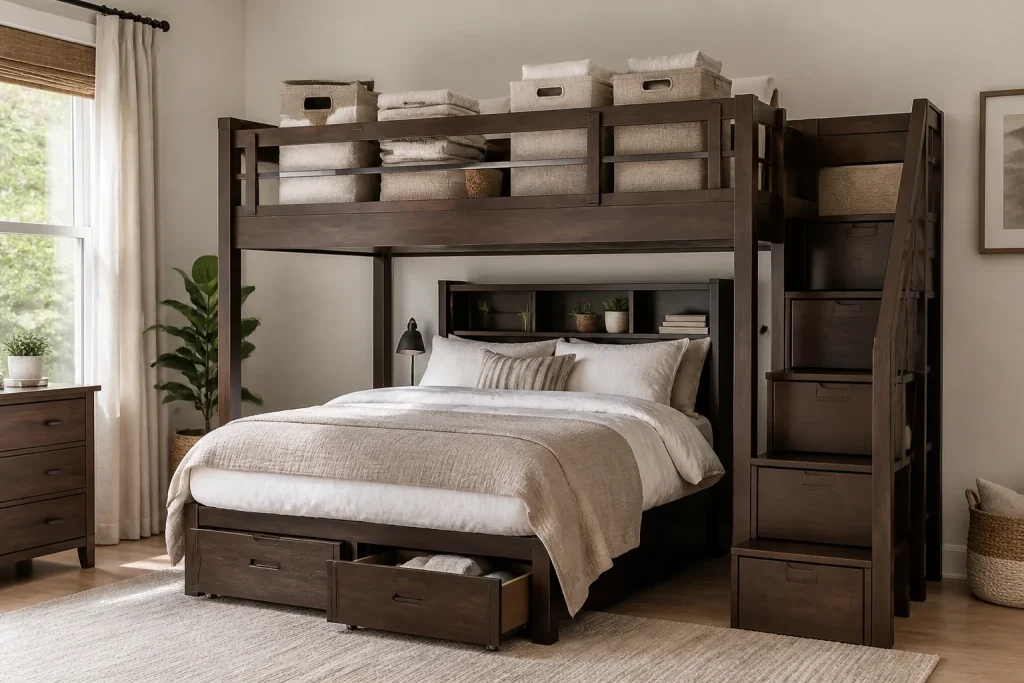
A twin over full loft bed with storage can solve two problems at once: sleep space and clutter. The twin bed gives one sleeper a smaller footprint, while the full bed below offers more room for a second sleeper, seating, or a study setup depending on the design. Storage features such as drawers, shelves, or stair cubbies can help a shared bedroom feel more organized without adding separate furniture.
Before buying, it helps to think like a space planner rather than only a furniture shopper. Measure the room carefully, note door swings and windows, and confirm ceiling height, mattress thickness limits, and the footprint of any attached staircase or dresser base. For a bunk or loft style bed, safety and fit matter as much as style, especially when the frame will be used daily.
Table of Contents
Quick Answer
A twin over full loft bed with storage is best when you need sleeping space for two levels and want to reduce the need for dressers or extra shelving. Measure the room, confirm ceiling clearance, check mattress height limits, and choose the storage layout that fits how the room will actually be used.
| Decision | Practical guidance |
|---|---|
| Room size | Confirm the bed footprint plus at least 24–36 inches of walking space where possible. |
| Ceiling height | Leave enough room above the top mattress for sitting up safely and moving around the ladder or stairs. |
| Storage type | Choose drawers for clothing, shelves for books, or stair storage for frequently used items. |
| Mattress selection | Use the manufacturer’s allowed thickness so guardrails remain effective. |
| Placement | Avoid blocking windows, vents, closet doors, and ceiling fans. |
| Safety | Use a stable frame, proper guardrails, and secure assembly; follow CPSC guidance for bunk and loft beds. |
How to decide if this layout fits your room
Start with the room dimensions, then map out the usable floor area. A twin over full loft bed with storage often takes more space than a standard twin bunk because the full-size lower section increases the bed’s width and the storage base can extend the footprint further. That means the room may still work on paper but feel cramped once drawers or stairs open.
A simple planning method is to sketch the room to scale and mark every fixed feature: doors, closets, baseboards, windows, radiators, outlets, and vents. Then mark the bed footprint, including any drawers that need clearance. If the bed uses stairs instead of a ladder, check which side the stairs must face so daily access does not block another part of the room.
- Measure wall-to-wall width and length.
- Measure ceiling height at more than one point if the room slopes.
- Note the swing of the bedroom door and closet door.
- Leave space for opening drawers, stairs, or under-bed storage panels.
- Confirm where outlets and reading lights will be located.
Ceiling height and top-bed clearance
Ceiling height is one of the first limits to check. Even if the mattress fits, the sleeper on the upper level should have enough room to sit up without hitting the ceiling. The exact minimum depends on the bed frame, guardrail height, and mattress thickness, so the manufacturer’s specifications matter more than a general rule of thumb. If the room has a fan, consider how far the top bunk or loft surface sits from the blades and whether a fan should be removed or relocated.
Storage options and what each one is good for
Storage can be the difference between a bed that simply fits and a bed that helps the room function. The best choice depends on what needs to be stored and how often it is accessed. Drawers are useful for clothing, seasonal bedding, or toys. Shelves work well for books, baskets, alarm clocks, and small items. Stair storage can be a good option when you want safer access than a ladder and need a place for everyday items.
When comparing designs, look beyond the number of storage compartments. Check drawer depth, whether drawers clear nearby furniture when pulled open, and whether the storage is built into the frame or added as a separate unit. Built-in storage usually looks cleaner, but it may be harder to move later. Separate storage pieces can offer flexibility, but they can also take up extra floor space.
| Storage type | Best use | Room-planning note |
|---|---|---|
| Drawers | Clothes, linens, toys | Allow clearance for full extension. |
| Shelves | Books, bins, decor | Good for items used often; may need baskets to reduce clutter. |
| Stair storage | Daily-use items, folded clothing | Takes more floor space but can be easier to climb than a ladder. |
| Under-bed space | Large bins or seasonal storage | Works best when the frame height leaves enough access. |
| Headboard shelving | Small items, charging, books | Useful when floor space is tight. |
Mattress fit, height limits, and comfort planning
Mattress choice affects both comfort and safety. On bunk and loft frames, a thicker mattress can reduce guardrail height, which is one reason manufacturers usually specify a maximum mattress thickness. Follow that limit closely. If the mattress is too tall, the rail may not do enough to keep the sleeper positioned safely on the upper level.
For a twin over full loft bed, the top and bottom mattresses may have different comfort needs. The upper mattress is often chosen a little thinner to preserve rail clearance, while the lower full-size mattress can sometimes be selected for more standard comfort, depending on headroom. If the lower bed is positioned close to the floor, also consider how easy it is to get in and out without bumping the frame.
Safety checks that should not be skipped
This kind of bed can be practical, but it is not the right place to cut corners. A proper inspection should begin before purchase and continue after assembly. Look for a frame designed for the exact configuration you want, rather than modifying a standard bed with add-ons that were not intended for that model.
After assembly, recheck fasteners periodically, especially in a shared room where the bed will get daily use. Make sure the frame is level, the guardrails are secure, and the ladder or stairs feel stable. Younger children should follow the age and use guidance provided by the manufacturer, and heavy or loose bedding should not interfere with the guardrails or climbing path. For any bunk or loft setup, follow CPSC and applicable eCFR guidance on construction, rail placement, and entrapment prevention.
Best room layouts for twin over full loft beds with storage
The most successful layouts usually leave the bed against a long wall or in a corner where the storage side can be planned deliberately. In a narrow room, placing the stairs or drawers on the open side can keep traffic moving. In a wider room, centering the bed may work if there is still enough open floor area for desks, play space, or a second storage cabinet.
If the bed is going into a shared bedroom, think about traffic flow first and decor second. Each sleeper should have a clear way in and out, and the storage should not force one child or teen to cross the other’s space every time they need a sweater or book. In a multipurpose room, the full lower bed can sometimes serve as a guest bed or reading lounge, but only if there is enough clearance to use it comfortably.
When stairs are better than a ladder
Stairs usually take more floor space, but they can make the bed feel more usable day to day. They also create enclosed storage opportunities. If the room is tight, though, stairs can crowd a doorway or closet. Measure the footprint of the staircase carefully before assuming it will fit where a ladder would.
What to check before ordering
A short checklist can prevent a long return process. Verify the product dimensions, mattress sizes, maximum mattress thickness, weight limits, finish, and assembly requirements. Also confirm whether the bed ships in one box or several, whether the ladder or stairs can be mounted on either side, and whether the storage pieces are reversible.
If the bed is for a growing child, consider how long the layout will remain useful. A twin over full loft bed with storage may be a good long-term choice because the lower full bed offers more flexibility than a second twin. For families comparing similar space-saving options, it can also help to review an L-shaped bed guide to see whether a different footprint would work better in the same room.
Related Guides
Keep planning with dorm loft bed ladders, bunk bed weight limits, L-shaped bed guide.
FAQ
Is a twin over full loft bed with storage good for small rooms?
It can be, but only if the room has enough floor space for the wider full-size section and for drawers or stairs to open without blocking doors or closets.
What mattress thickness should I use?
Use the maximum thickness listed by the manufacturer. That limit helps preserve guardrail height on the upper bed and keeps the frame within its intended safety design.
Are stairs safer than a ladder?
Stairs can be easier to climb and may feel more stable, but they also take up more room. The safer choice depends on the specific frame, the user, and the room layout.
Can I put a ceiling fan near this type of bed?
Only if the bed and sleeping position stay well clear of the fan blades. If there is any doubt, choose a different fan placement or remove the fan.
What storage type is most practical?
Drawers are usually the most practical for clothing and bedding, while shelves work better for books and small items. Stair storage is useful when you want both access and storage.