Disclosure: This site may earn a commission if you buy through links on this page or elsewhere on the site. For bunk beds, always check the manufacturer instructions and current safety guidance before building, modifying, or using any bed.
Bunk bed safety rails are not decorative. They are one of the main protections for the upper bunk, and they only work when they are high enough above the mattress, securely attached, and not interrupted by unsafe gaps.
Use this checklist when buying a bunk bed, replacing a mattress, assembling a bed, or inspecting a used bunk.
Table of Contents
Quick Answer
Bunk bed safety rails should be securely attached, high enough above the top of the mattress, and free of large gaps or loose parts. CPSC guidance says guardrails must extend at least 5 inches above the top of the mattress, and upper bunks with mattress foundations more than 30 inches from the floor need guardrails.
| Rail check | What to verify |
|---|---|
| Height above mattress | At least 5 inches above the mattress top. |
| Mattress thickness | Within the bed manufacturer limit. |
| Attachment | No loose screws, hooks, or brackets. |
| Gaps | No openings that could trap a child. |
| Ladder opening | Clear access without removing rail protection. |
Measure Rail Height After the Mattress Is In
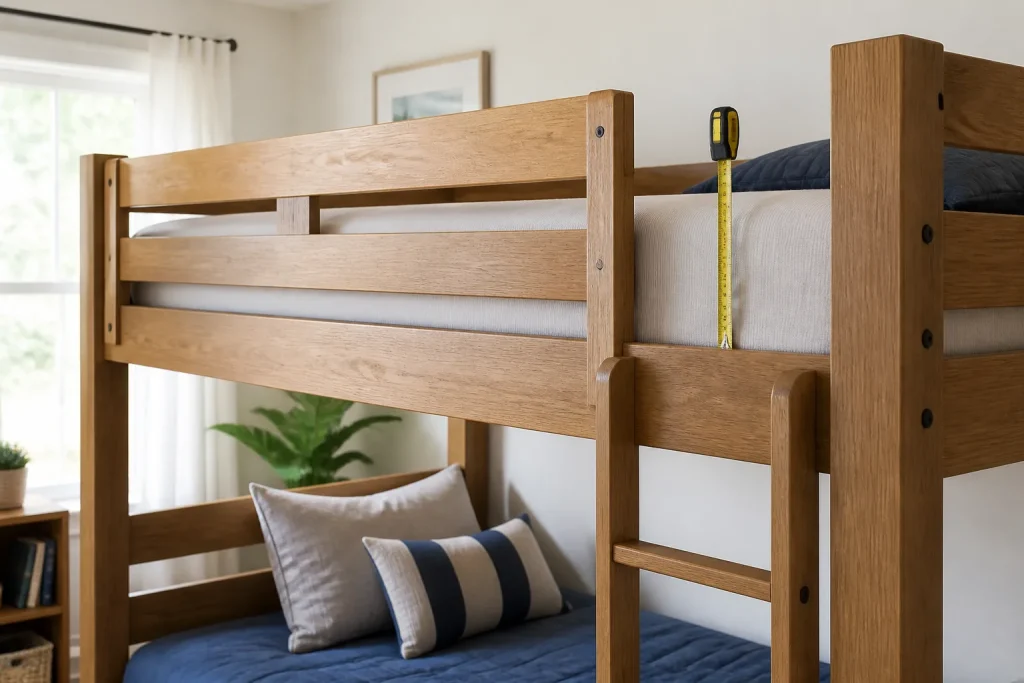
The rail height that matters is the height above the mattress surface, not the height above the slats. Install the mattress, add any topper that will stay, then measure from the mattress top to the top of the rail.
If the mattress is too thick, the rail can become ineffective even when the frame itself is assembled correctly.
Check Both Sides of the Upper Bunk
A wall side still needs attention. Beds can shift, walls may have baseboards, and gaps near the mattress can create problems. Do not assume the wall replaces a rail unless the manufacturer design specifically accounts for that placement.
The ladder opening should be only as large as needed for safe entry and exit.
- Inspect the wall side and open side.
- Check the rail near the pillow and foot areas.
- Confirm the ladder opening is not oversized.
- Keep pillows and bulky bedding away from openings.
Used Bunk Beds Need Extra Inspection
Used beds may have missing rails, replacement hardware, cracked wood, bent metal, or mattresses that do not match the original design. Ask for the model number and manual if possible.
If you cannot confirm the rail system is complete and secure, do not use the upper bunk until the missing parts are replaced.
| Used-bed issue | Safer response |
|---|---|
| Missing rail | Replace with manufacturer-approved part. |
| Loose fasteners | Tighten or replace correct hardware. |
| Unknown mattress thickness | Measure and compare to manual. |
| Damaged rail | Stop upper-bunk use until repaired. |
| Modified frame | Get professional review or replace bed. |
Do Not Hang Heavy Items From Rails
Rails should not become storage bars, climbing handles, or anchor points for heavy organizers. Hanging weight from rails can stress hardware and make the bed harder to inspect.
If storage is needed, use floor bins, under-bed drawers, or manufacturer-approved accessories.
Measure the Rail from the Mattress Top: 5 Inches Means 12.7 cm
For U.S. bunk beds subject to 16 CFR Parts 1213 or 1513, the guardrail must extend at least 5 inches (12.7 cm) above the top of the thickest mattress and foundation configuration specified by the manufacturer. Measure vertically from the mattress sleeping surface to the top of the rail. Measuring from the slats, floor or empty frame gives the wrong answer.
| Measurement reference | Correct checkpoint |
|---|---|
| Upper rail top | Top of the actual protective rail, not a decorative finial |
| Mattress sleeping surface | Top of the installed mattress in the approved setup |
| Vertical difference | At least 5 inches / 12.7 cm under the applicable rule |
| End openings and ladder entry | Must meet the manufacturer’s design and entrapment requirements; height alone is insufficient |
Do not remove the wall-side rail because the bed stands near a wall. The full-length protective rail belongs on the side specified in the instructions, including the wall side where a child can become trapped. Never replace a rigid guardrail with fabric netting, rope, or an aftermarket cushion.
Four Guardrail Checks for a Used Bunk Bed
- Locate the model and maximum permitted mattress thickness before installing new bedding.
- Look for loose screws, splits, bent rails, broken brackets and mismatched replacement parts.
- Verify that both required upper rails are present and mounted in the positions described by the maker.
- Stop using the upper bunk if the hardware, gap configuration or intended mattress cannot be verified.
What to Do if a Guardrail Is Loose or Missing
Stop using the upper sleeping level until the missing or damaged components are replaced correctly. Record the bunk-bed model from its label and request the matching rails, brackets, bolts, and installation instructions from the manufacturer. A homemade wooden strip, fabric barrier, or universal rail that looks similar may introduce new gaps or attachment failures. Avoid drilling extra holes into posts or installing a different mattress to disguise a low rail.
After installing approved parts, inspect both rail connections, the mattress-to-frame gaps, ladder entry, and the rail height with the intended mattress in place. Check the frame periodically because fasteners can loosen during normal use. Children younger than six must not use the upper bunk; this U.S. safety requirement is separate from rail height. Prohibit rough play or jumping on either bed.
The ceiling-height guide explains how to preserve both mattress clearance and the required rail height without making the sleeping position too high.
Related Guides
For mattress thickness, read top bunk mattress height. For mesh accessories, see DIY bunk bed safety nets.
FAQ
How high should bunk bed rails be above the mattress?
CPSC guidance says guardrails must extend at least 5 inches above the top of the mattress.
Can I remove a bunk bed rail if the bed is against a wall?
Do not remove rails unless the manufacturer instructions explicitly allow the configuration.
Can a safety net replace a bunk bed rail?
No. Mesh or netting should not replace proper guardrails.