Disclosure: This site may earn a commission if you buy through links on this page or elsewhere on the site. Always check the manufacturer instructions and current safety guidance before buying, building, modifying, or using bunk beds or loft beds.
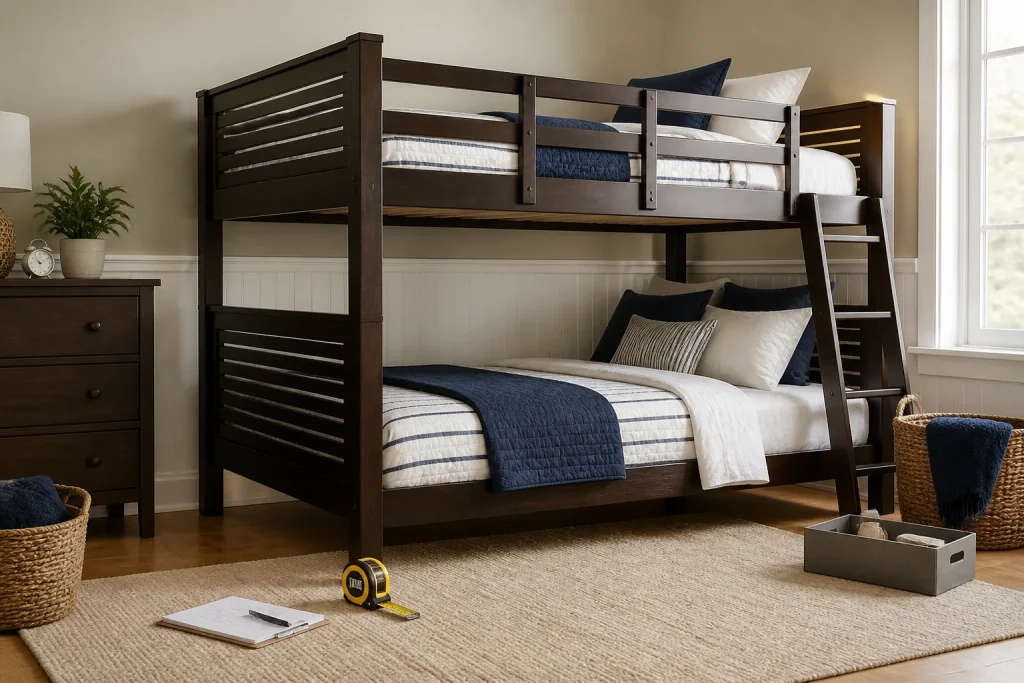
A full bunk over full bunk setup gives each sleeper a full-size mattress in a stacked footprint. That makes it useful in rooms where two people need more sleeping width than a twin bunk can provide, but floor space is still limited.
Before buying, measure the room carefully and check ceiling height, mattress thickness, ladder access, and how the bed will affect doors, windows, and storage placement. The best choice is usually the one that fits the room cleanly and leaves enough space to move around safely.
Table of Contents
Quick Answer
A full bunk over full bunk bed is a practical option when two full mattresses are needed in one footprint, but it works best in rooms with enough ceiling height, clear wall space, and a plan for ladder access, bedding, and circulation.
| Decision | Practical guidance |
|---|---|
| Room size | Measure wall length, ceiling height, and the swing of nearby doors before choosing a frame. |
| Sleeper fit | A full mattress offers more width than a twin, which can help older kids, teens, or adults share a room more comfortably. |
| Mattress choice | Use the mattress thickness recommended by the bed maker so guardrails and ladder access remain practical. |
| Layout | Leave a clear path to the ladder and avoid placing the bunk where headroom feels tight near sloped ceilings or vents. |
| Storage | Plan drawers, bins, or a nearby dresser ahead of time because a full bunk stack can dominate the room footprint. |
What a full bunk over full bunk is best for
A full over full bunk bed stacks two full-size mattresses, so it provides more sleep surface than the common twin-over-twin arrangement. That extra width can matter in a room used by older children, teens, guest sleepers, or siblings who simply need more personal space.
It is also a practical choice when the goal is to keep the sleeping area compact without moving up to two separate beds. The tradeoff is that the frame is larger and heavier, so it needs more floor space and a room plan that accounts for height, ladder position, and room flow.
- Useful for shared bedrooms where both sleepers need a wider bed
- A stronger fit for guest rooms that occasionally need two full sleeping surfaces
- Not ideal for very small rooms where the frame blocks drawers, closets, or walking space
When a different bunk size may be better
If the room is narrow, a twin-over-twin or twin-over-full arrangement may be easier to place. If one sleeper is much taller, a twin XL configuration may be more efficient than widening both bunks. The right answer depends on the room, the sleepers, and how often the bed will be used.
Measure the room before you buy
Start with the basic measurements: wall length, wall height, ceiling height, and the distance to nearby furniture, vents, and windows. Then map out where the ladder will land and how much clearance is left at the foot and sides of the bed.
A full bunk over full bunk usually needs more visual and physical breathing room than a twin bunk. Even if the frame technically fits, it may still feel cramped if it sits too close to a closet door, a ceiling fan, or a hallway entry.
| Measurement to check | Why it matters |
|---|---|
| Ceiling height | Affects top bunk headroom and overall comfort |
| Wall length | Determines whether the bed can fit without crowding doors or furniture |
| Window placement | Helps avoid blocking light, blinds, or emergency access |
| Door swing | Prevents the frame from interfering with entry or closet use |
| Ladder side | Influences how easily the top bunk can be reached |
Room planning rule of thumb
Leave enough open space that the bed does not become the only usable feature in the room. If moving between the closet, dresser, and door feels awkward on paper, it will likely feel worse once the bed is assembled.
Mattress and bedding choices matter more on a full bunk
The mattress for a full bunk over full bunk should match the manufacturer’s maximum thickness guidance. That matters because a thicker mattress can reduce guardrail effectiveness and make the top bunk harder to use safely and comfortably.
Bedding should also be planned with the bunk height in mind. Deep-pocket sheets may help with thicker mattresses, but oversized bedding can bunch or hang awkwardly on the top bunk. Simpler bedding tends to work best in bunk layouts because it is easier to manage and replace.
- Check the mattress thickness limit before shopping
- Choose a mattress weight that one person can reasonably move when making the bed
- Look for bedding that stays contained and does not create extra bulk near the ladder
Comfort without oversizing
A full mattress does not need to be overly thick to feel comfortable. In a bunk setup, balance comfort with practicality so the top bunk remains usable and the guardrails are not compromised.
Safety and access basics to keep in mind
For a bunk bed, access and stability are as important as mattress size. The top bunk should have clear ladder access, and the bed should be placed so the sleeper can climb without twisting around furniture or wall corners.
The mattress height, guardrail height, and ceiling clearance should all work together. If the top bunk feels too close to the ceiling or too low against the rail, the room may need a different frame style or a smaller mattress profile.
If you are comparing frame styles, it can also help to look at general bunk bed safety and room setup guidance. This site’s bunk bed planning resources can be useful for that broader context, but the exact fit still depends on the specific bed and room.
- Keep the top bunk away from ceiling fans and low fixtures
- Make sure the ladder side is easy to reach from the room’s main walkway
- Check that the frame sits level on the floor and does not rock
- Avoid placing tall furniture where it could interfere with climbing or exiting
When stairs may be preferable
If the room will be used often, or if the sleepers are younger or less comfortable with a ladder, a bunk bed with stairs may be easier to live with. Stairs take more floor space, but they can improve everyday access and reduce the need to climb at an angle.
How to plan the rest of the room around the bunk
A full bunk over full bunk dominates a room more than many buyers expect. That means storage, lighting, and circulation should be planned at the same time as the bed. A single dresser may work better than multiple smaller pieces, especially if the bunk occupies a long wall.
Think in zones: sleeping, dressing, storage, and movement. If the bed takes the main wall, place storage in areas that would otherwise be dead space, such as corners or the area beside the door, as long as it does not block walking paths.
- Use under-bed or nearby bin storage for items that do not need daily access
- Keep lamps, chargers, and reading lights within reach of each sleeper
- Avoid crowding the ladder side with open bins, toy storage, or clothing racks
Shared-room privacy
If two sleepers share the room, small privacy touches can help: coordinated bedding, a bedside shelf, or a curtain arrangement that does not interfere with access. Keep additions simple so the room stays easy to clean and move through.
Buying checklist before you commit
A full over full bunk bed is a big purchase, so it helps to review a short checklist before ordering. The most useful questions are practical ones: will the frame fit the room, will the mattress fit the frame, and will the room still function after the bed is installed?
If the answer to any of those is uncertain, it is better to pause and re-measure than to assume the bed will work. Bunk beds are less forgiving than standard beds because height, access, and room clearance all matter at once.
- Exact room dimensions, including ceiling height
- Mattress size and maximum mattress thickness
- Ladder or stair orientation
- Weight guidance from the manufacturer
- Assembly plan and whether you need two people to build it
- Placement for drawers, shelves, and lighting
A practical fallback plan
If the full bunk does not fit as hoped, a different bunk configuration or separate full beds may be easier to live with. Good room planning includes a backup option, not just the ideal layout.
Related Guides
Keep planning with bunk bed games safety ideas, DIY quad bunk bed planning, DIY L-shaped bunk bed planning.
FAQ
Is a full bunk over full bunk too big for most rooms?
It depends on the room shape and ceiling height. It can work well in medium-size bedrooms, but it may feel crowded in narrow rooms or spaces with closets, windows, or sloped ceilings.
What mattress thickness should I use on a full bunk over full bunk?
Use the thickness recommended by the bed manufacturer. In bunk setups, mattress height affects both guardrail performance and how easy the top bunk is to use.
Can adults use a full over full bunk bed?
Yes, if the frame is designed for the intended load and the room layout supports safe access. Adults should still check the manufacturer’s weight guidance and make sure the ladder and guardrails are appropriate.
Is a ladder or stairs better for a full bunk bed?
Ladders use less space, while stairs are usually easier to climb but take more room. The better choice depends on the age of the users and the room layout.
What should I measure first before buying?
Start with ceiling height, wall length, and the space needed for doors and closet access. Then measure the mattress area and the planned ladder side.