Disclosure: This site may earn a commission if you buy through links on this page or elsewhere on the site. Always check the manufacturer instructions and current safety guidance before buying, building, modifying, or using bunk beds or loft beds.
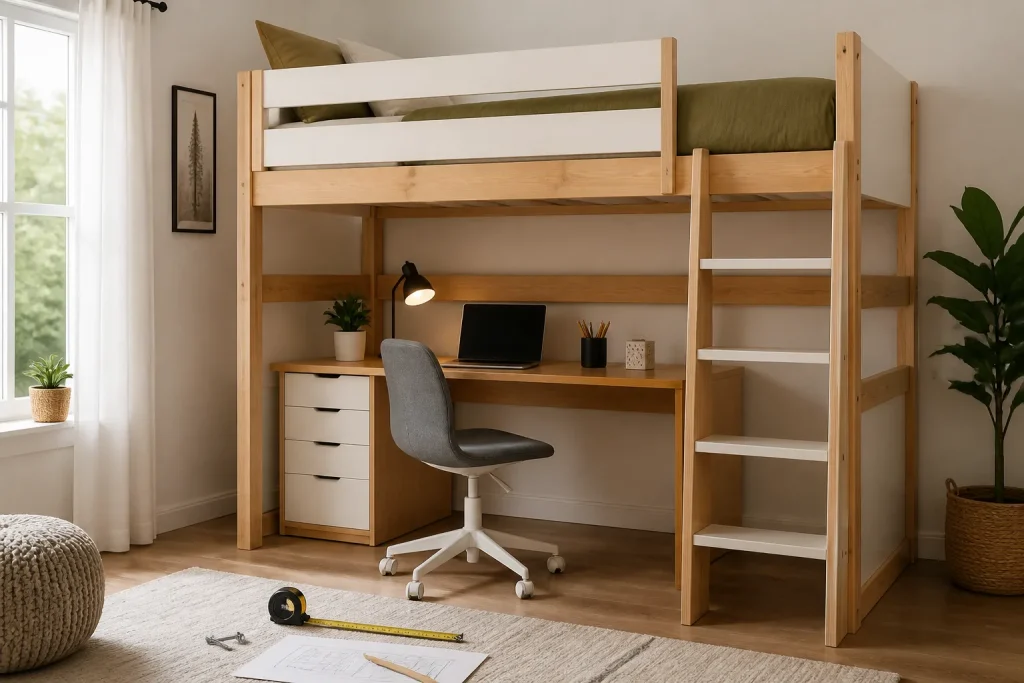
A loft bed with a desk below can free up floor space and create a compact sleep-and-study zone, but the setup works best when the height, light, and clearance are planned together. If the desk area is too low, too dim, or crowded with cords, the space becomes uncomfortable fast.
The goal is to make the under-bed area usable every day: enough headroom to sit, enough light to work, and enough structure to keep the desk, ladder, and bedding from fighting for the same space.
Table of Contents
Quick Answer
Start by matching loft height to the desk and chair height, then verify ceiling clearance, add task lighting, and leave a clear path for sitting, climbing, and cable routing. If the room is tight, prioritize safe headroom and access over maximum storage.
| Decision | Practical guidance |
|---|---|
| Choose loft height | Pick a height that leaves comfortable seated headroom at the desk, not just enough space for the mattress. |
| Check ceiling clearance | Make sure the top mattress, bedding, and any guardrail still leave usable space below the ceiling or fan. |
| Plan lighting | Use task lighting aimed at the desk surface plus soft ambient light to reduce shadows under the bed. |
| Allow chair movement | Confirm the chair can roll or pull out without hitting ladder supports or bed legs. |
| Route cables safely | Keep cords away from the ladder path and use clips or trays so nothing dangles into foot traffic. |
| Reserve a clear workflow | Place the keyboard, monitor, and storage within easy reach so the desk does not feel cramped. |
Choose the right loft height first
The most important decision is the vertical relationship between the mattress platform and the desk surface. A loft bed with desk below works best when the desk user can sit upright without brushing the underside of the frame. In practice, that means measuring the chair seat height, the desk height, and the space from the desk surface to the underside of the bed frame before you buy or assemble anything.
If the bed is too low, the desk area may feel like a crawl space. If it is too high, the bed can become harder to access and the room may feel top-heavy. For many rooms, the best choice is the lowest loft height that still allows the desk area to function comfortably.
- Measure desk height from the floor to the work surface.
- Measure chair seat height and back height.
- Check the space from seat to underside of the loft frame.
- Leave room for the user’s shoulders and elbows when typing.
- Confirm the ladder position does not block the chair or monitor.
| Measurement | Why it matters |
|---|---|
| Floor to desk surface | Determines whether the workstation feels usable or cramped |
| Desk surface to underside of loft | Controls seated headroom and monitor clearance |
| Floor to mattress top | Affects climb safety and overall room proportions |
| Mattress thickness | Thicker mattresses reduce usable headroom above and below |
| Chair width and height | Needed to avoid collisions with the ladder or support legs |
A simple height check before purchase
A good pre-purchase check is to mock up the bed height with painter’s tape or stacked boxes in the room. Then sit at the intended desk position and confirm that your head, arms, and monitor would fit comfortably. This is especially helpful in dorm rooms or smaller bedrooms where every inch matters.
Confirm ceiling and room clearance
The room ceiling matters just as much as the bed frame. Even if the desk fits below the loft, the overall setup can still feel awkward if the mattress sits too close to a fan, light fixture, sloped ceiling, or sprinkler head. Leave enough space for safe movement and for bedding to be adjusted without pressing into the ceiling.
If the room has an eight-foot ceiling, take extra care with mattress thickness and guardrail height. In low-ceiling rooms, a low-loft or mid-loft configuration is often more practical than a tall loft. Ceiling fans deserve special attention: even a blade that seems far away can become a problem when someone sits up in bed or stands on the mattress.
- Measure from floor to ceiling in several spots if the ceiling is uneven.
- Check for fan blades, vents, smoke detectors, and ceiling lights.
- Account for mattress thickness and bedding loft.
- Avoid placing the desk directly beneath a ceiling obstruction if you can help it.
- Keep the top bunk area compliant with the manufacturer’s height and guardrail instructions.
When a lower loft is the better choice
Choose a lower loft when the room is short, the user wants easier bed access, or the desk user needs more open seated space than the room can comfortably provide. A lower loft may sacrifice some storage potential, but it usually improves day-to-day comfort and reduces the feeling of being boxed in.
Set up the desk for a better under-bed workflow
The area under a loft bed works best when the desk is treated like a real workstation, not just a place to slide a laptop. Start with the essentials: a surface that fits your equipment, a chair that can move freely, and storage that does not force you to twist under the frame for every item.
Keep high-use items close to hand. If you need to stand up to reach notebooks, chargers, or a printer, the space will feel inefficient. Use shallow storage, drawer units, or wall-mounted organizers where allowed so the desk remains open. In small rooms, the best workflow is usually one clear work zone, one storage zone, and one climbing zone.
- Place the monitor or laptop so it is centered and not too close to the bed frame.
- Keep the keyboard and mouse within shoulder width.
- Use a small drawer caddy for pens, notes, and chargers.
- Avoid deep shelves that create head bumps or block chair movement.
- Leave a clear path from the chair to the room door.
| Workflow element | Practical setup tip |
|---|---|
| Laptop or monitor | Use a riser or stand only if there is still enough headroom |
| Chair movement | Test rolling or scooting before finalizing cable placement |
| Daily storage | Put the most-used items in the nearest drawer or bin |
| Printer or equipment | Keep bulky devices outside the seated leg zone if possible |
| Climbing path | Do not place storage bins in the ladder landing area |
Use lighting that works on both levels
Lighting is one of the most overlooked parts of a loft bed with a desk below. The under-bed area can get shadowed because the loft frame blocks overhead light. Relying on one ceiling fixture usually leaves the desk dark and the bed area harshly lit or dimly uneven.
A better approach is layered lighting: task light for the desk, softer ambient light for the room, and a separate reading light near the bed if needed. Choose fixtures that do not interfere with the ladder or overhead guardrail. Clip-on lamps, wall sconces where appropriate, or slim desk lamps often work better than bulky floor lamps in tight rooms.
- Use direct task lighting aimed at the desk surface.
- Add a second light source so the room does not depend on one overhead fixture.
- Avoid lamps with cords that cross the ladder path.
- Choose bulbs with comfortable brightness for screen use and reading.
- Test glare on your monitor before settling on a lamp position.
Best places for light sources
Place the main desk light slightly to the side of your dominant hand to reduce shadows while writing or using a keyboard. If the bed area needs its own light, put it where it can be reached safely from the mattress without forcing the user to lean over the edge. The best lighting plan is the one that keeps both sleeping and studying practical, not flashy.
Keep cords, shelves, and storage under control
Cable management matters more in a lofted workspace because cords can snag on ladder rails, chair arms, or storage bins. Keep power strips mounted or secured, and do not let chargers hang where feet or knees can catch them. If the desk supports electronics, plan cord routing before you place the furniture against the wall.
Storage should stay low and stable. Tall, narrow organizers may fit the footprint, but they can make the workspace feel crowded and reduce visual openness. Under-bed setups usually work better with low drawers, cubbies, or bins that slide fully clear of the chair area.
If you need more bedroom storage than the desk area can comfortably hold, consider using the rest of the room for closed storage instead of stacking everything under the loft.
- Secure power strips to the desk or wall with appropriate hardware.
- Use cable clips or trays to keep cords off the floor.
- Avoid overloading outlets or daisy-chaining strips.
- Keep storage bins low enough to avoid knee and shin contact.
- Do not store heavy items where they can fall during ladder use.
Safety checks you should not skip
Because a loft bed is an elevated sleep surface, safety comes first. Follow the manufacturer’s assembly instructions closely, use the recommended mattress thickness, and keep guardrails and ladder parts in place. Do not modify the frame unless the manufacturer allows it, and do not assume a homemade desk arrangement under the bed is safe just because it fits.
Check that the bed is stable before use, that fasteners remain tight, and that the mattress does not reduce the guardrail’s effectiveness. If children will use the setup, follow age and supervision guidance carefully. For adults, it is still important to keep the climb clear, avoid dangling cords, and make sure the mattress does not create an unstable or overly high sleeping surface.
If the setup feels wobly, cramped, or difficult to access, revise it. A looser, more open arrangement is usually safer and easier to live with than one packed tightly to the room edges.
- Tighten all bolts after assembly and recheck them periodically.
- Use the mattress thickness recommended for the frame.
- Keep ladder rungs unobstructed and dry.
- Leave the desk area free of items that could fall during climbing.
- Do not place the bed near ceiling fixtures, fans, or low hanging hardware.
Related Guides
Keep planning with dorm loft bed ladders, bunk bed weight limits, L-shaped bed guide.
FAQ
How much headroom should a desk have under a loft bed?
Enough for the seated user to work comfortably without touching the underside of the frame. Measure the chair height and your seated posture, then test the space before final assembly.
Can I use any desk under a loft bed?
Not always. A desk needs to fit the available width, depth, and height under the frame, and it should still allow the chair to move and the user to sit upright.
What is the best lighting for a loft bed with a desk below?
A mix of task lighting and ambient room lighting works best. The desk needs direct light, and the bed area should not rely on the same fixture if it creates shadows.
Should the ladder go next to the desk or away from it?
Away from it if possible. The ladder should not block chair movement or sit where cords and storage bins will collect.
Is a loft bed with desk below safe for adults?
It can be, if the bed is assembled correctly, the mattress height follows the manufacturer’s guidance, and the desk area stays clear of cords and obstacles.