Disclosure: This site may earn a commission if you buy through links on this page or elsewhere on the site. For bunk beds, always check the manufacturer instructions and current safety guidance before building, modifying, or using any bed.
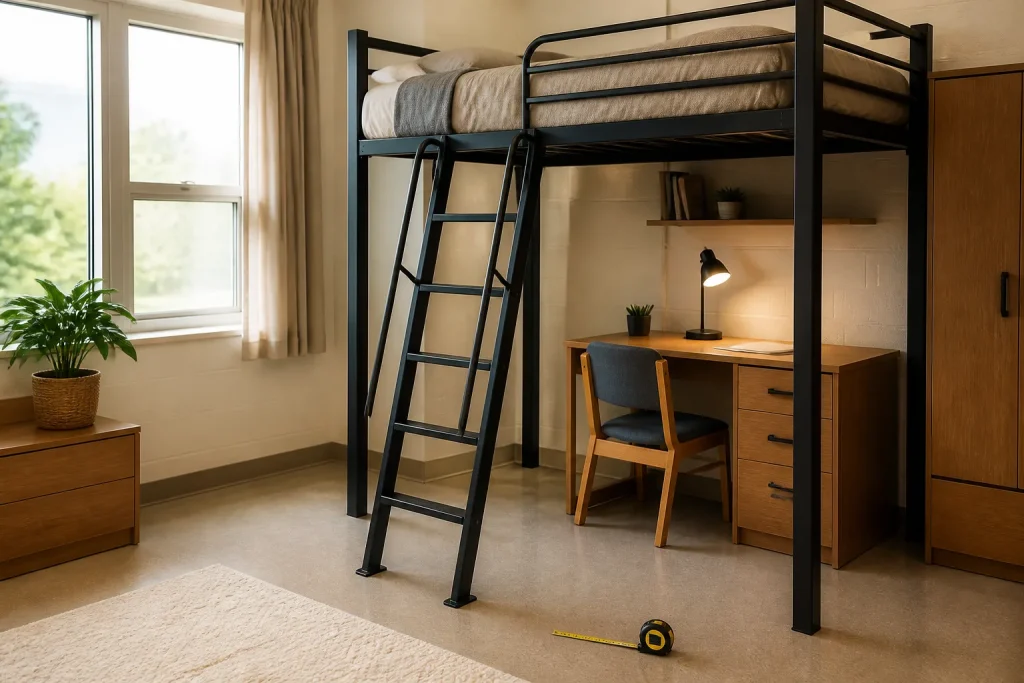
A dorm loft bed ladder looks simple, but it decides whether the bed is easy to use every morning and safe to climb when the room is dark, crowded, or full of laundry.
Dorm rules vary by school and housing provider. Use this guide as a measurement checklist, then confirm your residence hall rules before buying, modifying, or attaching any ladder.
Table of Contents
Quick Answer
A safer dorm loft bed ladder is fixed securely to the bed, reaches the floor without wobbling, has comfortable rungs, stays clear of drawers and doors, and leaves enough space for the sleeper to climb down without twisting. Do not rely on a loose decorative ladder or a ladder that hooks on but can slide sideways.
| Ladder detail | What to check |
|---|---|
| Attachment | Bolted, bracketed, or manufacturer-approved connection. |
| Angle | Climbable without leaning into furniture or walls. |
| Rungs | Wide enough for the foot and not painfully sharp. |
| Landing | Clear floor space at the bottom. |
| Dorm rules | No drilling, cutting, or custom hardware unless allowed. |
Start With the Bed and Room Layout
Measure from the floor to the mattress deck, then measure the available floor area around the bed. A ladder that fits the bed can still fail the room if it blocks a closet, desk chair, mini fridge, or walkway.
If the bed is school-owned, do not drill new holes or replace parts without written permission from housing.
- Keep the ladder visible from the room entrance.
- Avoid placing the ladder behind a desk chair or storage bin.
- Leave enough floor space to step down with both feet.
- Check that the ladder does not interfere with guardrails.
Fixed Ladders Are Usually Better Than Loose Ladders
A fixed ladder reduces the chance of the ladder moving while someone climbs. Hook-on ladders can work when they are designed for the frame, but they should not slide, tip, or lift off with normal use.
If the ladder feels unstable during a slow test climb, stop using the loft until the attachment problem is solved.
| Ladder type | Best use |
|---|---|
| Built-in vertical ladder | Small rooms where floor space is tight. |
| Angled ladder | Rooms with more floor depth and easier climbing needs. |
| End ladder | Layouts where the side of the bed is blocked. |
| Hook-on ladder | Only when made for the specific frame and secured against sliding. |
Rung Comfort Matters
Thin metal rungs can hurt bare feet and make sleepy climbs harder. If a ladder has narrow rungs, use only manufacturer-approved tread covers that do not spin, loosen, or make the rung slippery.
Never add bulky padding that changes the grip or creates a trip point.
Night Use Needs a Clear Path
Most ladder problems show up at night. Keep shoes, backpacks, bins, cords, and rugs away from the landing area. A small wall light or clip light can help, but cords should not cross the climbing path.
Related Guides
For step-style access, see dorm loft bed steps. For broader loft setup checks, read loft bed clearance for 8-foot ceilings.
FAQ
Can I use any ladder with a dorm loft bed?
No. Use a ladder made for the frame or approved by the housing provider. A ladder that does not attach securely is not a safe substitute.
Is an angled ladder better than a vertical ladder?
An angled ladder is often easier to climb, but it needs more floor space. A vertical ladder saves space but requires more careful climbing.
Can I add grip tape to dorm loft ladder rungs?
Only use a non-damaging option allowed by your housing rules and make sure it cannot peel, slide, or create a sharp edge.