Disclosure: This site may earn a commission if you buy through links on this page or elsewhere on the site. For bunk beds, always check the manufacturer instructions and current safety guidance before building, modifying, or using any bed.
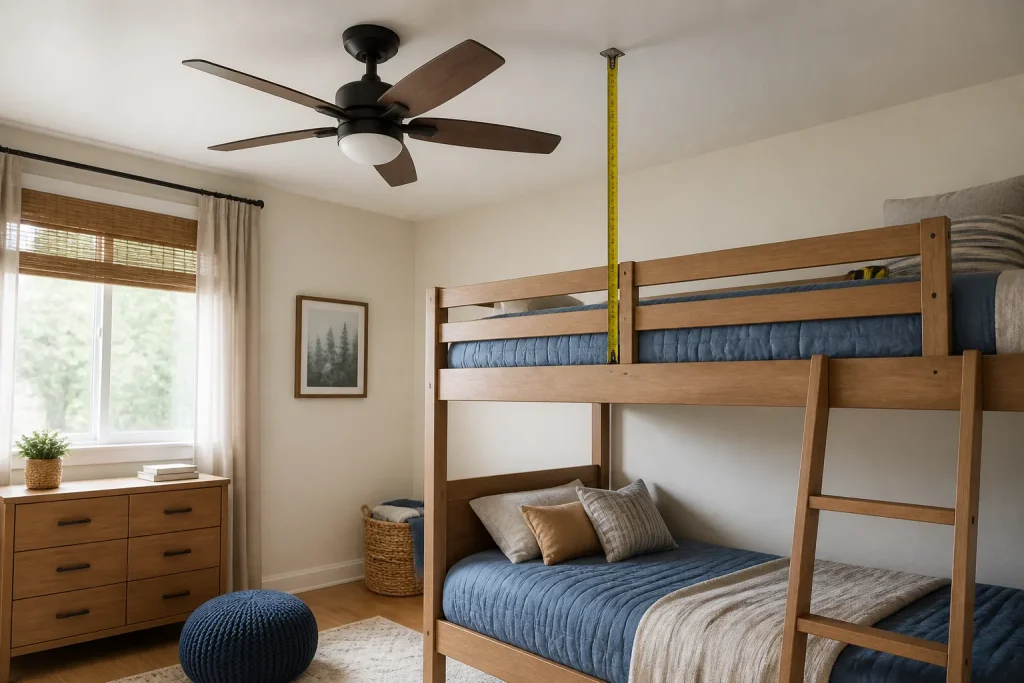
A ceiling fan and a bunk bed can be a risky combination if the upper bunk sits too close to the blades. The issue is not only whether the fan clears the mattress. A child sitting up, reaching, climbing, or changing bedding may be much closer to the fan than you expect.
Before placing a bunk bed in any room with a ceiling fan, measure the bed height, mattress thickness, guardrail height, fan blade sweep, and the path from the ladder to the pillow area.
Table of Contents
Quick Answer
Do not place an upper bunk within reach of ceiling fan blades. If a fan is near the top bunk, turn it off until the layout is changed. The safer options are moving the bunk, removing the fan, replacing it with a flush-mount light, or using a wall fan placed away from the ladder and sleeping area.
| Check | Safer decision |
|---|---|
| Fan over upper bunk | Move the bed or remove the fan. |
| Fan near ladder | Avoid the layout; climbing changes reach distance. |
| Low ceiling | Use low beds, trundles, or flush lighting. |
| Need airflow | Use a wall fan or tower fan away from the bed. |
| Rental room | Choose a bed layout that does not rely on fan removal. |
Measure the Reach Zone, Not Just the Mattress
A top bunk sleeper can sit up, stretch, lift bedding, or climb near the rail. That reach zone is larger than the mattress footprint. Measure from the fan blade tips to the ladder, guardrail, pillow area, and any point where a child might sit.
If you cannot confidently keep the fan out of reach, treat the layout as unsafe.
- Measure fan blade sweep from wall to wall.
- Measure top of mattress to fan blade height.
- Include mattress thickness and toppers.
- Check the ladder entry point.
- Check whether bedding changes bring hands near the fan.
Guardrails and Fan Clearance Are Separate Issues
A proper guardrail does not solve fan clearance. CPSC guidance says bunk beds with mattress foundations more than 30 inches from the floor need guardrails, and those guardrails must extend at least 5 inches above the mattress. Fan clearance still has to be handled separately.
Do not lower, remove, or modify a guardrail to make a ceiling fan seem farther away.
Better Airflow Alternatives
If the room needs airflow, choose a solution that does not spin above the upper bunk. A wall-mounted fan away from the bed, a tower fan on the floor, or improved HVAC airflow is usually easier to manage than a ceiling fan over a bunk.
Keep cords away from ladders and do not place portable fans where they block the path to the bed.
| Alternative | Best use |
|---|---|
| Flush-mount ceiling light | Low ceiling rooms. |
| Wall fan away from bed | Airflow without blades over the bunk. |
| Tower fan | Rental rooms where fixtures cannot change. |
| Window fan | Seasonal airflow if cords stay clear. |
| Lower bed layout | Rooms where fan removal is not possible. |
Red Flags
If any of these are true, do not use the upper bunk until the layout is corrected. A room that works for a normal bed may not work for a bunk bed.
- A child can touch the fan from the top bunk.
- The fan is above the ladder opening.
- The bed must sit under the fan to fit.
- The ceiling is low and the mattress is thick.
- The fan pull chain hangs near the upper bunk.
Related Guides
For room-height planning, see ceiling height for bunk beds and bunk beds under sloped ceilings.
FAQ
Can a ceiling fan be above a bunk bed?
It should not be within reach of the upper bunk. If the fan is close to the sleeping or climbing area, move the bed or remove the fan.
Is turning the fan off enough?
Turning it off is a temporary safety step, not a layout fix. The fan can be switched on later by mistake.
What is the safest fan alternative for a bunk room?
A wall fan or tower fan placed away from ladders and sleeping areas is usually safer than blades above the upper bunk.