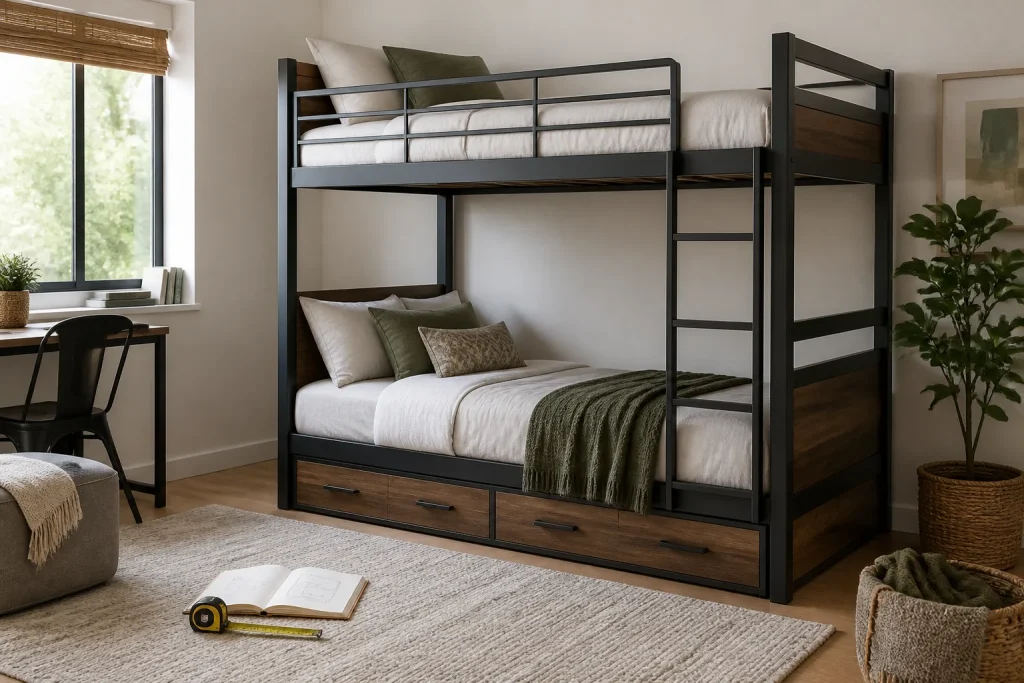
Disclosure: This site may earn a commission if you buy through links on this page or elsewhere on the site. Always check the manufacturer instructions and current safety guidance before buying, building, modifying, or using bunk beds or loft beds.
Bunk beds are often associated with children’s rooms, but they can also work for adults when the frame, mattress, and room layout are chosen carefully. The main differences are simple: adults usually need more room, higher weight capacity, and a more conservative approach to safety and comfort.
If you are planning sleeping space for roommates, guests, a rental, a cabin, or a small apartment, start with the room dimensions and the bed’s published specifications. Then check ceiling height, mattress thickness, access, and how the bed will be used day to day. A bunk bed that works well for adults is less about novelty and more about fit, stability, and practical access.
Table of Contents
Quick Answer
Adults can use bunk beds safely when the frame is sized for adult use, the weight rating is adequate, the ceiling height is sufficient, and the mattress thickness stays within the manufacturer’s limits. Measure first, then choose the bed.
| Decision | Practical guidance |
|---|---|
| Choose the frame size | Use twin, full, or queen configurations only if the manufacturer allows adult use and clearly states the size, weight limit, and mattress limit. |
| Check the room | Measure ceiling height, floor space, and clearance around ladders or stairs before buying. |
| Pick the access type | Stairs are usually easier for adults and better for frequent use; ladders save space but require more caution. |
| Confirm mattress fit | Stay within the recommended thickness so guardrails remain effective and the sleeper does not sit too high. |
| Plan for daily use | Think about reading, changing sheets, getting in and out at night, and whether both bunks will be occupied regularly. |
What makes a bunk bed workable for adults
Adult use changes the priorities. A frame that feels fine for children may be too cramped, too low, or too lightly built for regular adult sleeping. Look for a bed designed with adult dimensions in mind, not just a child-size frame with a larger mattress.
The most important specification is the manufacturer’s weight rating for each bunk. That includes the mattress, bedding, and the person sleeping there. You should also look at the overall construction, joint design, and whether the bed is intended for routine use or occasional guest use.
- Check the maximum weight per sleeping surface, not just the total frame weight.
- Confirm the bed size matches the adults who will use it. Twin XL, full, and queen layouts are common choices.
- Review the manufacturer’s mattress thickness limit for the top bunk.
- If the bed will be used every night, prefer a sturdier frame and easier access than you would for a guest room.
Use case matters
A bunk bed for a vacation cabin does not need the same setup as one in a full-time apartment. Frequent use usually favors stairs, better room clearance, and more durable materials. Occasional use may allow a simpler layout, but the safety basics still apply.
Measure the room before you buy
Room planning is where many bunk bed problems start. Adults need enough headroom, enough space to sit up safely, and enough room to move around the bed without bumping walls, doors, or ceiling fixtures. A tape measure is more useful than a product photo at this stage.
Start with ceiling height, then measure the exact footprint the bunk bed will occupy. Include space for ladders or stairs, drawer fronts if the bed has storage, and the swing of any nearby door or closet. If the room is tight, a smaller footprint with stairs on one side may work better than a wider frame that looks attractive on paper.
| Measurement | Why it matters | What to check |
|---|---|---|
| Ceiling height | Determines usable headroom on the top bunk | Measure floor to ceiling at the exact bed location, not just the room’s advertised height |
| Bed footprint | Affects walking space and furniture placement | Include ladder, stairs, and any overhang |
| Clearance above the top mattress | Protects against contact with the ceiling | Leave enough room for safe sitting and bedding |
Top-bunk sitting space
Adults should be able to sit up without hitting the ceiling. That means the top bunk needs more than just enough space for the mattress and frame. If the ceiling is low, the top bunk can feel awkward even when it technically fits. If you want a deeper look at room height planning, the site’s ceiling-height guide can help you compare layouts before purchasing.
Choose the right mattress and access style
Mattress choice affects both comfort and safety. For the top bunk, follow the frame’s thickness limit closely. A mattress that is too thick can reduce the effective height of the guardrail, while one that is too thin may feel unsupportive for an adult sleeper.
Access style matters just as much. Ladders are space-saving, but they can be less comfortable for frequent use, especially for adults getting up at night. Stairs take more room, but they are often the better choice for full-time adult use, especially if the upper bunk will be accessed often.
- Use a mattress size and thickness approved by the bunk bed manufacturer.
- Avoid adding a box spring unless the bed is specifically designed for it.
- Choose low-profile bedding for the top bunk so guardrails stay effective.
- If the bed will be used by adults with mobility concerns, stairs are usually preferable to a steep ladder.
Think about bedding and changing sheets
Adult bunk beds are easier to live with when the bedding is practical. Deep-pocket sheets, low-profile protectors, and bedding that is easy to remove will save time during setup and laundry. If you expect frequent sheet changes, the top bunk should be reachable without awkward stretching or unsafe climbing.
Safety basics for adults using bunk beds
The same core safety principles apply to adults as to children: stable assembly, proper guardrails, secure access, and respect for weight limits. Adults may be less likely to use a bunk bed in a playful way, but daily use can still create wear and added stress on the frame if the bed is underspecified.
Before first use, tighten all hardware, confirm that the bed is on level flooring, and recheck connections after the bed has been used for a short time. If a bunk bed wobbles, creaks excessively, or shifts when the sleeper gets in and out, stop using it until the issue is corrected.
- Do not exceed the published weight limit for any bunk.
- Keep the top bunk guardrails unobstructed and use a mattress within the allowed thickness.
- Place the bed on a level floor and avoid improvised shims unless the manufacturer allows them.
- Keep ceiling fans, lights, and shelving away from the upper sleeping area.
- Use proper assembly hardware and do not substitute missing parts.
When to avoid a bunk bed
A bunk bed may not be the right choice if the room has very low clearance, if the sleeper has trouble climbing, if the frame is not rated for adult use, or if the bed would be used in a way that makes getting in and out difficult. In those cases, a loft bed or another space-saving layout may be a better fit.
Best room layouts for adults
Adults using bunk beds usually need a more thoughtful layout than a typical kids’ room. Think about the bed as part of a small floor plan, not as a standalone piece. Placement affects walking paths, storage, privacy, and whether the room feels orderly or crowded.
L-shaped bunk beds can help in some rooms by separating sleeping zones and making the layout feel less stacked. In other spaces, a standard vertical bunk is more efficient. The right choice depends on wall length, ceiling height, and whether you want room for desks, drawers, or open floor space.
- Place the bed so the top bunk does not sit under a ceiling fixture or fan.
- Leave a clear path to the ladder or stairs.
- Avoid blocking closets, windows, or emergency exits.
- If privacy matters, consider curtains or room dividers that do not interfere with safety or access.
Storage and shared-room planning
For roommates or guest rooms, storage usually matters as much as sleeping space. Under-bed drawers, nearby dressers, and wall-mounted shelves can reduce clutter without making the bunk harder to use. Keep storage away from climbing access so the bed stays easy to enter and exit.
Where bunk beds for adults can make sense
Adult bunk beds can work well in vacation homes, rental properties, shared bedrooms, studios, and rooms where occasional guest sleeping is needed. They are also a practical option when you want two sleeping spaces without taking up the floor area of two separate beds.
For many buyers, the best setup is not the cheapest or the tallest model. It is the one that fits the room, supports the intended users, and is easy to use every day. If you are comparing layouts, the site’s L-shaped bed guide can help you think through space use alongside comfort and access.
- Vacation homes: useful when you need multiple beds in one room.
- Shared apartments: helpful when floor space is limited.
- Guest rooms: practical if the bed will not be used nightly.
- Dorm-style spaces: efficient when the room has enough clearance and clear rules for use.
Related Guides
Keep planning with bunk bed games safety ideas, DIY quad bunk bed planning, DIY L-shaped bunk bed planning.
FAQ
Are bunk beds safe for adults?
They can be, if the bed is built and rated for adult use, assembled correctly, and used within the manufacturer’s weight and mattress limits. Safety depends on the frame, room fit, and access style.
What mattress works best on the top bunk for adults?
Use the mattress size and thickness recommended by the manufacturer. A low-profile mattress is often a better choice because it helps preserve guardrail height and keeps the sleeper lower in the frame.
Is a ladder or stairs better for adults?
Stairs are usually easier and more comfortable for adults, especially for frequent use. Ladders save space, but they are less convenient and can be harder to use at night.
How much ceiling height do I need?
It depends on the bunk design and mattress thickness. Measure the exact room height and compare it with the bed’s overall height and required clearance before buying.
Can two adults share a bunk bed setup?
Yes, if the bed is designed for the intended mattress sizes and each bunk’s weight rating supports the sleeper and bedding. Check every published limit before use.