Disclosure: This site may earn a commission if you buy through links on this page or elsewhere on the site. For bunk beds, always check the manufacturer instructions and current safety guidance before building, modifying, or using any bed.
Bunk bed safety rails are not decorative. They are one of the main protections for the upper bunk, and they only work when they are high enough above the mattress, securely attached, and not interrupted by unsafe gaps.
Use this checklist when buying a bunk bed, replacing a mattress, assembling a bed, or inspecting a used bunk.
Table of Contents
Quick Answer
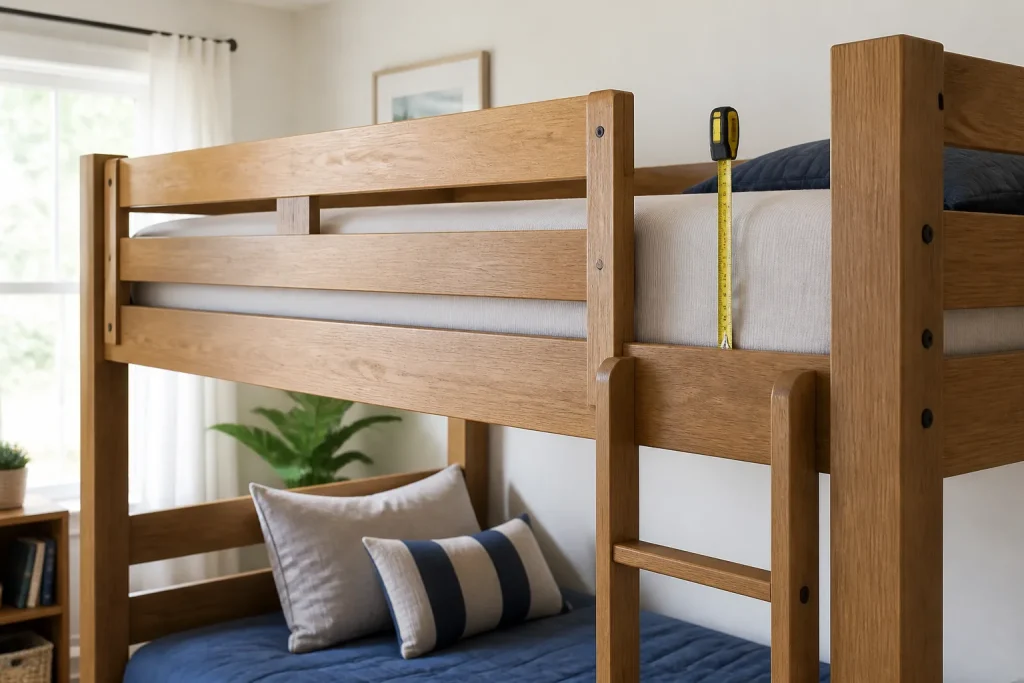
Bunk bed safety rails should be securely attached, high enough above the top of the mattress, and free of large gaps or loose parts. CPSC guidance says guardrails must extend at least 5 inches above the top of the mattress, and upper bunks with mattress foundations more than 30 inches from the floor need guardrails.
| Rail check | What to verify |
|---|---|
| Height above mattress | At least 5 inches above the mattress top. |
| Mattress thickness | Within the bed manufacturer limit. |
| Attachment | No loose screws, hooks, or brackets. |
| Gaps | No openings that could trap a child. |
| Ladder opening | Clear access without removing rail protection. |
Measure Rail Height After the Mattress Is In
The rail height that matters is the height above the mattress surface, not the height above the slats. Install the mattress, add any topper that will stay, then measure from the mattress top to the top of the rail.
If the mattress is too thick, the rail can become ineffective even when the frame itself is assembled correctly.
Check Both Sides of the Upper Bunk
A wall side still needs attention. Beds can shift, walls may have baseboards, and gaps near the mattress can create problems. Do not assume the wall replaces a rail unless the manufacturer design specifically accounts for that placement.
The ladder opening should be only as large as needed for safe entry and exit.
- Inspect the wall side and open side.
- Check the rail near the pillow and foot areas.
- Confirm the ladder opening is not oversized.
- Keep pillows and bulky bedding away from openings.
Used Bunk Beds Need Extra Inspection
Used beds may have missing rails, replacement hardware, cracked wood, bent metal, or mattresses that do not match the original design. Ask for the model number and manual if possible.
If you cannot confirm the rail system is complete and secure, do not use the upper bunk until the missing parts are replaced.
| Used-bed issue | Safer response |
|---|---|
| Missing rail | Replace with manufacturer-approved part. |
| Loose fasteners | Tighten or replace correct hardware. |
| Unknown mattress thickness | Measure and compare to manual. |
| Damaged rail | Stop upper-bunk use until repaired. |
| Modified frame | Get professional review or replace bed. |
Do Not Hang Heavy Items From Rails
Rails should not become storage bars, climbing handles, or anchor points for heavy organizers. Hanging weight from rails can stress hardware and make the bed harder to inspect.
If storage is needed, use floor bins, under-bed drawers, or manufacturer-approved accessories.
Related Guides
For mattress thickness, read top bunk mattress height. For mesh accessories, see DIY bunk bed safety nets.
FAQ
How high should bunk bed rails be above the mattress?
CPSC guidance says guardrails must extend at least 5 inches above the top of the mattress.
Can I remove a bunk bed rail if the bed is against a wall?
Do not remove rails unless the manufacturer instructions explicitly allow the configuration.
Can a safety net replace a bunk bed rail?
No. Mesh or netting should not replace proper guardrails.