Disclosure: This site may earn a commission if you buy through links on this page or elsewhere on the site. For bunk beds, always check the manufacturer instructions and current safety guidance before building, modifying, or using any bed.
A loft bed can work with an 8-foot ceiling, but only if the bed is low enough for the sleeper to climb, sit, and sleep without feeling boxed in. The frame height alone is not enough. Mattress thickness, guardrail height, and the space above the pillow matter too.
Before buying a loft bed, measure the room and the person who will use it. A setup that looks efficient online can feel cramped once a mattress, desk, chair, and ladder are in the room.
Table of Contents
Quick Answer
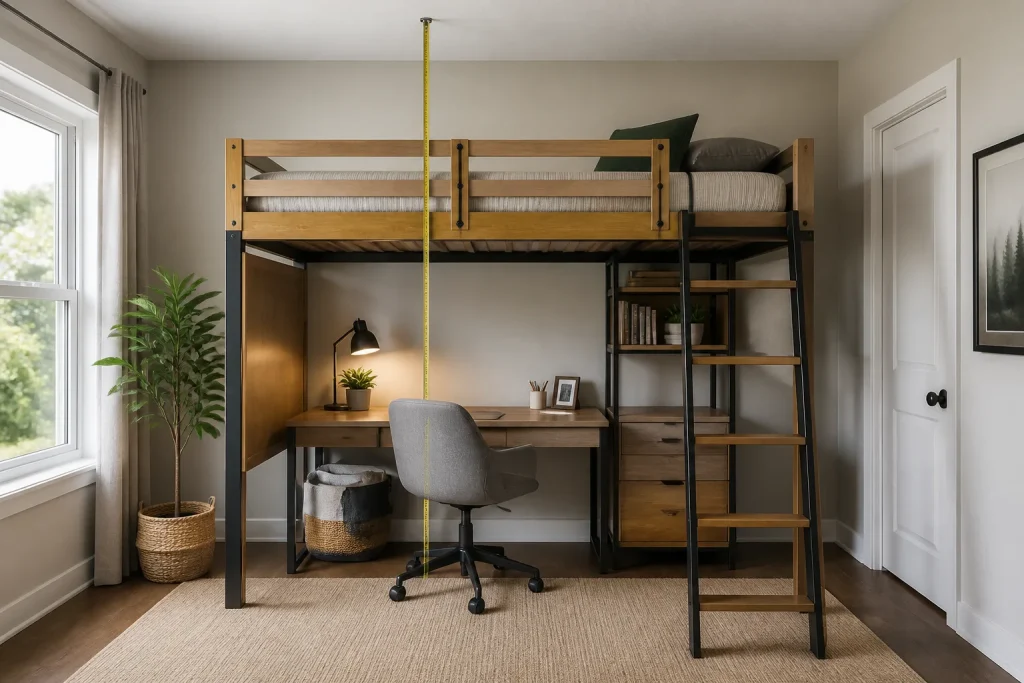
For an 8-foot ceiling, choose a low or mid-height loft unless the sleeper is small and does not need much sitting room. Measure floor-to-ceiling height, top of mattress height, seated height of the sleeper, guardrail height, ladder location, and clearance under the loft if a desk or chair will go below.
| Measurement | Why it matters |
|---|---|
| Ceiling height | Confirms the total vertical space available. |
| Top of mattress height | This is where the sleeper actually lies. |
| Seated height | Shows whether the sleeper can sit up comfortably. |
| Mattress thickness | A thick mattress reduces rail protection and headroom. |
| Under-loft clearance | Determines whether a desk setup is usable. |
Use the Real Mattress Height
Many loft bed mistakes come from measuring the frame without the mattress. A 10-inch mattress changes the usable space more than people expect. Toppers, pads, and bulky bedding add even more height.
If the manufacturer gives a maximum mattress thickness, treat that as a real limit. Do not exceed it just to make the bed feel softer.
- Measure the mattress and topper together.
- Check the bed manual for maximum mattress thickness.
- Confirm the guardrail still rises above the mattress.
- Avoid thick pillow-top mattresses on high lofts.
Check Sitting Clearance
The sleeper should be able to get in, turn, and settle without hitting the ceiling. A loft can technically fit while still being miserable to use every night.
Have the sleeper sit on the floor against a wall and measure from floor to the top of their head. Compare that to the clearance from the mattress top to the ceiling.
Desk Clearance Under the Loft
If a desk goes underneath, measure seated headroom below the frame. A chair, monitor, keyboard tray, and posture all affect comfort. A desk that fits on paper may feel cramped if the user bumps the frame while sitting.
For taller users, a lower desk or a non-loft layout may be better than forcing a tall loft into an 8-foot room.
| Under-loft use | Check before buying |
|---|---|
| Desk | Seated head clearance and chair movement. |
| Storage | Drawer clearance and ladder access. |
| Reading nook | Lighting and exit path. |
| Play space | No hanging cords or sharp low frame edges. |
| Empty space | Enough room for cleaning and inspection. |
When a Lower Bed Is Better
If the ceiling feels close, choose a low loft, storage bed, daybed, or trundle. Saving floor space is not worth creating a bed that is awkward to climb or hard to inspect.
Rooms with ceiling fans, sloped ceilings, or low fixtures need extra caution.
Related Guides
For bunk clearance planning, see ceiling height for bunk beds. For fan clearance, see ceiling fan safety with bunk beds.
FAQ
Is an 8-foot ceiling high enough for a loft bed?
Sometimes. Low and mid-height lofts are usually more realistic than tall lofts in 8-foot rooms.
How much headroom do you need above a loft bed?
Enough for the sleeper to enter, turn, and settle without hitting the ceiling. Measure the sleeper seated on the mattress height you plan to use.
Can adults use loft beds in 8-foot rooms?
Only if the bed is designed for adult weight and the room provides usable sitting and climbing clearance.