Disclosure: This site may earn a commission if you buy through links on this page or elsewhere on the site. For bunk beds, always check the manufacturer instructions and current safety guidance before building, modifying, or using any bed.
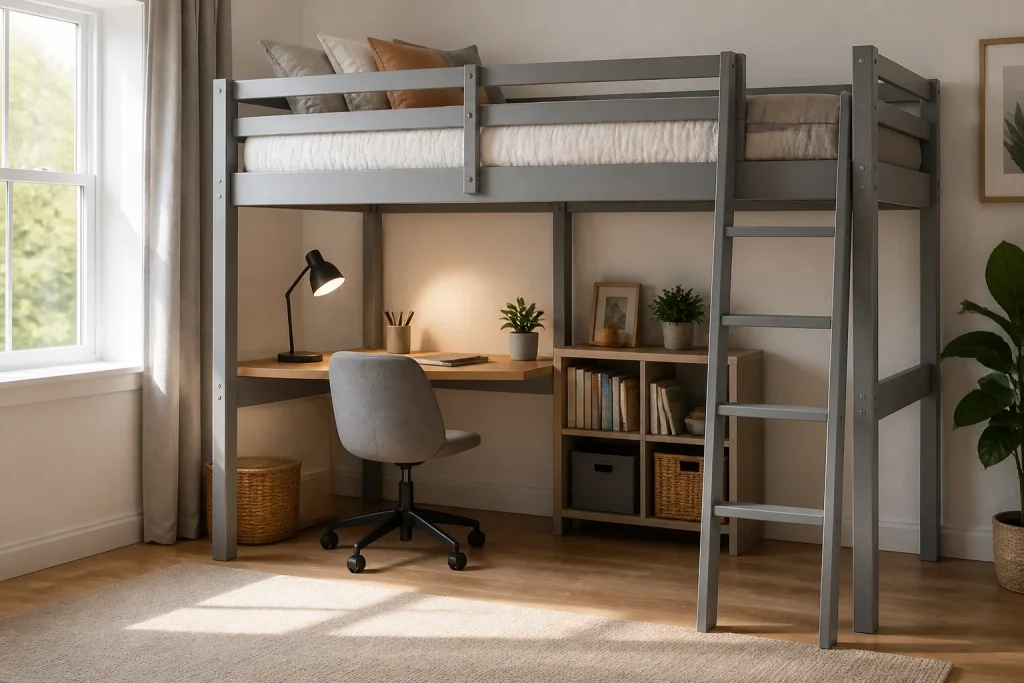
A bunk bed with no bottom is usually called a loft bed. Instead of a lower mattress, the space underneath can hold a desk, storage, play area, reading nook, or open floor space.
That open space is useful, but the upper sleeping area still needs the same careful checks you would give any raised bed.
Table of Contents
Quick Answer
A bunk bed with no bottom is generally a loft bed: one raised sleeping platform with usable space underneath. It can be a good choice when you need a desk or storage below, but the upper bunk still needs secure guardrails, a stable ladder or stairs, correct mattress thickness, and enough ceiling clearance to sit up safely.
| Under-bed use | Best fit |
|---|---|
| Desk | Older child, teen, or dorm room with good lighting. |
| Storage | Small bedrooms where drawers are limited. |
| Play area | Only if the structure is stable and the child is old enough for the upper bed. |
| Reading nook | Works well when headroom below is comfortable. |
| Second mattress on floor | Only if it does not crowd the ladder or exit path. |
Loft Bed vs Bunk Bed
A bunk bed normally has two sleeping surfaces stacked vertically. A loft bed raises one sleeping surface and leaves the lower area open.
Search results and stores sometimes blur the terms. When comparing products, look at the actual structure, not just the label.
The Upper Bed Still Needs Guardrails
Removing the lower bunk does not remove upper-bed safety requirements. The raised sleeping surface needs guardrails that stay high enough above the mattress after the mattress is installed.
A thick mattress can reduce the effective rail height, so check the manufacturer maximum mattress thickness before replacing the mattress.
- Measure guardrail height above the mattress top.
- Check both long sides of the bed.
- Inspect ladder and stair attachments.
- Keep the access opening as small as practical.
Plan the Space Underneath
The area below a loft bed should be useful without turning into a clutter trap. Keep cords, shelves, lamps, and furniture away from the ladder path.
If you put a desk underneath, check that the sleeper can climb down without stepping onto the chair.
| Item below loft | Planning note |
|---|---|
| Desk | Route cords along the wall and away from the ladder. |
| Dresser | Check drawer clearance. |
| Shelf | Anchor separately when appropriate; do not depend on the bed frame. |
| Beanbag or chair | Keep it clear of the ladder landing. |
| Curtains | Avoid fabric near lights, fans, or climb points. |
Ceiling Clearance Decides Comfort
A loft bed that technically fits can still feel cramped if the sleeper cannot sit up. Measure floor-to-ceiling height, deck height, mattress thickness, and seated headroom before buying.
For low ceilings, a low loft may be better than a tall loft with a crowded desk area below.
Related Guides
For ceiling math, see loft bed for an 8-foot ceiling. For upper-bed rails, read bunk bed safety rails.
FAQ
What do you call a bunk bed with no bottom bunk?
Most people call it a loft bed.
Can I remove the bottom bunk from a regular bunk bed?
Only if the manufacturer instructions allow it. The lower bunk may be part of the frame strength.
Can adults use loft beds?
Some loft beds are rated for adults, but you need to verify the manufacturer weight limit, mattress size, ladder design, and room clearance.