Disclosure: This site may earn a commission if you buy through links on this page or elsewhere on the site. Always check the manufacturer instructions and current safety guidance before buying, building, modifying, or using bunk beds or loft beds.
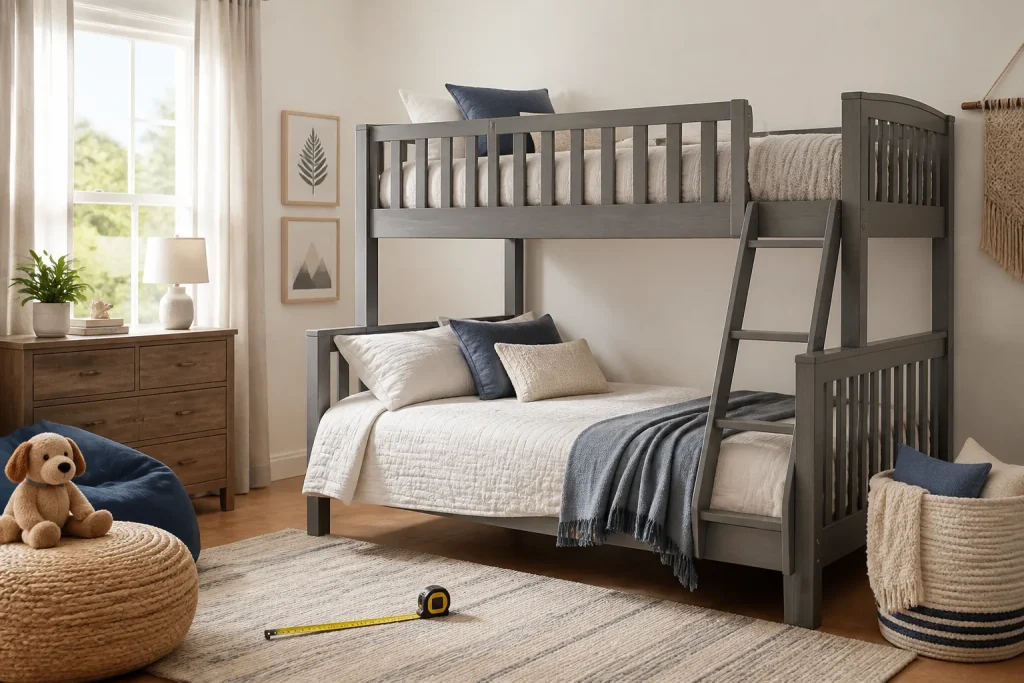
Twin over full size bunk beds can solve a common room-planning problem: one sleeping space needs to work for two different sleepers, or for a child and an occasional guest, without taking over the room. The twin top over full bottom layout offers more sleeping width on the lower bunk while keeping the overall footprint smaller than two separate beds.
The best way to shop this style is to start with the room, not the frame. Measure ceiling height, wall clearance, doorway width, and the path into the room before you compare finishes or storage features. That approach helps you avoid the most common mistakes, like buying a frame that fits the floor plan but not the mattress, ladder, or ceiling clearance.
Table of Contents
Quick Answer
Twin over full size bunk beds are a good choice when you want a compact frame with a wider lower bunk. They work best in rooms that can fit a full mattress footprint and enough headroom for safe access to the top bed.
| Decision | Practical guidance |
|---|---|
| Best for | Shared kids’ rooms, sleepovers, guest rooms, and spaces where one sleeper needs more room on the bottom |
| Measure first | Check ceiling height, floor footprint, ladder clearance, and mattress thickness before buying |
| Mattress planning | Confirm the mattress sizes the frame accepts; do not assume every twin/full bunk uses standard mattresses the same way |
| Room layout | Leave enough open space for making beds, opening drawers, and stepping onto the ladder safely |
| Storage needs | Choose drawers or underbed bins only if they still allow normal walking space around the bunk |
How twin over full bunk beds are sized
The name describes the mattress layout: a twin mattress on top and a full mattress on the bottom. In practical terms, that means the lower bunk is wider and more comfortable for older kids, teens, or an adult guest, while the top bunk stays narrower and easier to fit into a room.
Because the lower bed is full size, the frame usually needs more width than a twin-over-twin bunk. That extra width is useful, but it also changes how the room feels. A twin over full frame can dominate a small bedroom if the walls, doors, closets, or windows are already tight.
| Common layout question | What to check |
|---|---|
| Will standard mattresses fit? | Check the manufacturer’s exact mattress size guidance; some frames need low-profile mattresses |
| How much floor space does it use? | Measure the assembled footprint, not just the mattress sizes |
| Will bedding be easy to find? | Twin and full bedding is widely available, but the top bunk may need fitted sheets with a thinner profile |
| Can adults use the bottom bunk? | The lower full bed is often the more practical option for teens or adults, but always verify the frame’s weight limit |
Room planning before you buy
Start with the room dimensions in writing. A tape measure, not a product photo, should guide the decision. Note the length and width of the room, then mark doors, closet swings, windows, vents, baseboards, and any built-ins that may limit placement.
Ceiling height matters as much as floor size. Even if a bunk fits on paper, the top sleeper needs usable headroom, and the person making the bed needs enough space to work. If the ceiling is low, a shorter bunk profile may be better than a tall frame with more storage features.
It also helps to sketch the walkway. A bunk placed too close to a door or dresser can make the room frustrating to use. Leave enough space to open drawers, pull out a chair, and climb the ladder without bumping into furniture.
- Measure ceiling height from finished floor to finished ceiling.
- Check that the room entrance can fit the assembled frame or its largest parts.
- Leave clearance for ladder use, bedding changes, and daily walking paths.
- Map nearby furniture, outlets, windows, and vents.
- Confirm the bunk can be oriented without blocking closet access.
A simple measurement checklist
Before ordering, record the mattress dimensions the frame accepts, the bunk’s overall height, and the space needed around the ladder side. If a product page does not list these clearly, contact the seller before buying. For a useful comparison article on ceiling clearance, see the internal guide on ceiling height for bunk beds.
Choosing the right mattress thickness and bedding
Mattress thickness affects both comfort and safety. On the top bunk, a mattress that is too thick can reduce guardrail coverage and make the sleeper feel too close to the edge. On the bottom bunk, thickness is usually more flexible, but you still want to leave enough room for the sleeper to sit up comfortably.
Use the manufacturer’s maximum mattress height for the top bunk as a hard limit, not a suggestion. If no limit is listed, be cautious and look for a frame that provides clear guidance. Low-profile mattresses are often a practical choice for the upper bed because they help preserve rail height and headroom.
Bedding should be easy to remove and replace. Fitted sheets sized for twin and full mattresses are standard, but top-bunk bed making is simpler when the mattress is not overly deep and the frame allows access from more than one side.
- Use the listed maximum mattress height for the top bunk.
- Choose a thinner mattress if the top rail seems low after setup.
- Check sheet pocket depth for the mattress you plan to use.
- Consider whether you need washable bedding for frequent guest use.
When a lower profile mattress helps
A thinner top mattress can make the top bunk easier to use and can keep the room visually lighter. That matters in smaller rooms where tall furniture already makes the space feel crowded. The goal is not the deepest mattress possible; it is a combination of comfort, clearance, and easy daily use.
Storage and layout options that make the bunk more useful
Twin over full bunk beds can do more than provide sleeping space. Some frames add drawers, shelves, stairs with storage, or room underneath for bins. These features can help in a shared bedroom, but only if they do not block circulation around the bed.
Storage-heavy designs work best in rooms with enough open floor area to use the storage without moving other furniture. If the room is already tight, simple open space under the frame may be more practical than built-in drawers that need extra clearance.
If your goal is to create a more organized room, pair the bunk with one clear zone for sleep and one clear zone for play, study, or dressing. That keeps the room from feeling overloaded.
- Drawers need space to open fully.
- Stairs can be easier than a ladder but take more floor area.
- Open underbed space works well for labeled bins.
- Keep one side of the room less crowded for access and cleaning.
Good room matches for this layout
This style is often a good fit for sibling rooms, guest rooms that need a flexible lower bed, and multipurpose rooms where one sleeper uses the top bunk and another uses the full bottom bed. It can also work in rooms with modest ceiling height if the overall frame stays within safe clearances.
Safety and comfort basics to check before assembly
Bunk beds are a safety-sensitive purchase, so it is worth being methodical. Check the frame’s assembly instructions, weight limits, guardrail placement, ladder attachment, and mattress height limits before anyone sleeps on it. Do not assume the bunk will perform well if it is only partially assembled or if hardware is left loose.
For the top bunk, guardrails should be properly installed on all exposed sides per the manufacturer’s instructions. The ladder should be stable, easy to reach, and placed where it will not force awkward climbing. If the frame includes stairs, make sure each step is level and that the route is clear of rugs or clutter.
If you want additional ideas for making a bunk room more engaging without compromising common sense, you can review bunk bed games safety ideas for age-appropriate room use.
For more detailed ceiling planning, the internal ceiling height for bunk beds guide can help you think through clearance before purchase.
- Tighten all hardware after assembly and recheck it later.
- Follow the manufacturer’s mattress height and weight limits.
- Keep the ladder side unobstructed.
- Use the bunk only after the frame is fully assembled and stable.
- Do not add accessories that interfere with rails or climbing access.
How to compare frames when shopping
Two twin over full bunk beds can look similar online but behave very differently in a real room. Compare the total height, footprint, rail height, ladder position, mattress depth limits, and whether the lower bunk is placed high enough for easy sitting. Those details matter more than decorative finish alone.
If you are shopping for a shared room, think through the daily routine. Who will make the beds? Who will need the lower bunk? Will the ladder face a wall, or will it need to be climbed from the open side? The right answers make the room easier to use and reduce friction later.
For families considering other space-saving layouts, the L-shaped bed guide may also be useful as a comparison point. It can help you decide whether a twin over full bunk or an L-shaped setup better fits the room and the sleepers.
| Feature | Why it matters |
|---|---|
| Total height | Affects headroom, visual scale, and ceiling clearance |
| Footprint | Determines whether the room still has usable walking space |
| Ladder placement | Affects daily access and where other furniture can go |
| Weight limits | Important for deciding who should use each bunk |
| Storage integration | Useful only if it does not crowd the room |
Buying with confidence
A good twin over full bunk bed should fit the room, the sleepers, and the daily routine. The right choice is rarely the tallest or most feature-packed frame. It is the one that matches the space you actually have and the way the room will be used every day.
Before purchasing, confirm the dimensions, mattress limits, assembly requirements, and return policy. If possible, compare the assembled height against your ceiling measurement and leave room for bedding and bed making. That final check prevents a lot of avoidable frustration.
If you want a practical shortlist, focus on fit first, then construction, then storage. Finish and style matter, but they should come after the basics are correct. A well-sized bunk is easier to live with than a stylish one that crowds the room.
- Fit the room first.
- Confirm mattress size and thickness limits.
- Check ladder or stair placement.
- Review storage needs realistically.
- Verify assembly and delivery details before ordering.
Related Guides
Keep planning with bunk bed games safety ideas, bunk beds under sloped ceilings, ceiling height for bunk beds.
FAQ
Is a twin over full bunk bed good for small rooms?
It can be, but only if the room has enough floor space for the wider bottom bunk and enough ceiling clearance for the top bunk. Measure carefully before buying.
Can an adult sleep on the bottom bunk?
Often yes, if the frame is designed for it and the weight limit allows it. Always check the manufacturer’s specifications.
Do I need special mattresses for a twin over full bunk bed?
Not always. Many use standard twin and full mattresses, but the top bunk may require a thinner mattress to stay within the rail height limits.
How much ceiling height do I need?
There is no single number that works for every frame, because bunk heights vary. Check the assembled bunk height, mattress thickness, and the manufacturer’s clearances before deciding.
Are stairs better than a ladder?
Stairs can be easier to use and may offer storage, but they usually take more floor space. A ladder is more compact but needs a clear path and careful placement.