Disclosure: This site may earn a commission if you buy through links on this page or elsewhere on the site. Always check bedding sizes and care instructions before buying.
A top sheet that slides loose every night is usually a fit problem, a tucking problem, or a bed-access problem.
The fix depends on whether the sheet is too small, the mattress is too thick, the sleeper moves a lot, or the bed is hard to reach because it sits against a wall or in a bunk.
Table of Contents
Quick Answer
To keep a top sheet tucked in, use a sheet with enough length, tuck the foot first, make tight hospital corners, smooth the sides under the mattress, and avoid slippery stacked bedding. If the mattress is very thick or hard to access, a duvet cover, zipper bedding, or fitted-style top sheet may be easier.
| Problem | Likely fix |
|---|---|
| Sheet pulls out at foot | Use a longer top sheet and tuck the foot deeper. |
| Corners come loose | Make hospital corners after smoothing the sheet. |
| Mattress is heavy | Use a sheet-tucking tool or lift one corner at a time. |
| Bed is against wall | Tuck from the accessible side and simplify bedding. |
| Sleeper kicks bedding loose | Try a duvet cover or zipper bedding. |
Start With Sheet Size
A top sheet needs enough extra length to tuck under the foot of the mattress. If the sheet barely reaches the bottom edge, it will pull loose quickly.
Deep mattresses, toppers, and pillow-top designs can make normal sheets feel too short even when the label says the size is correct.
Use Hospital Corners
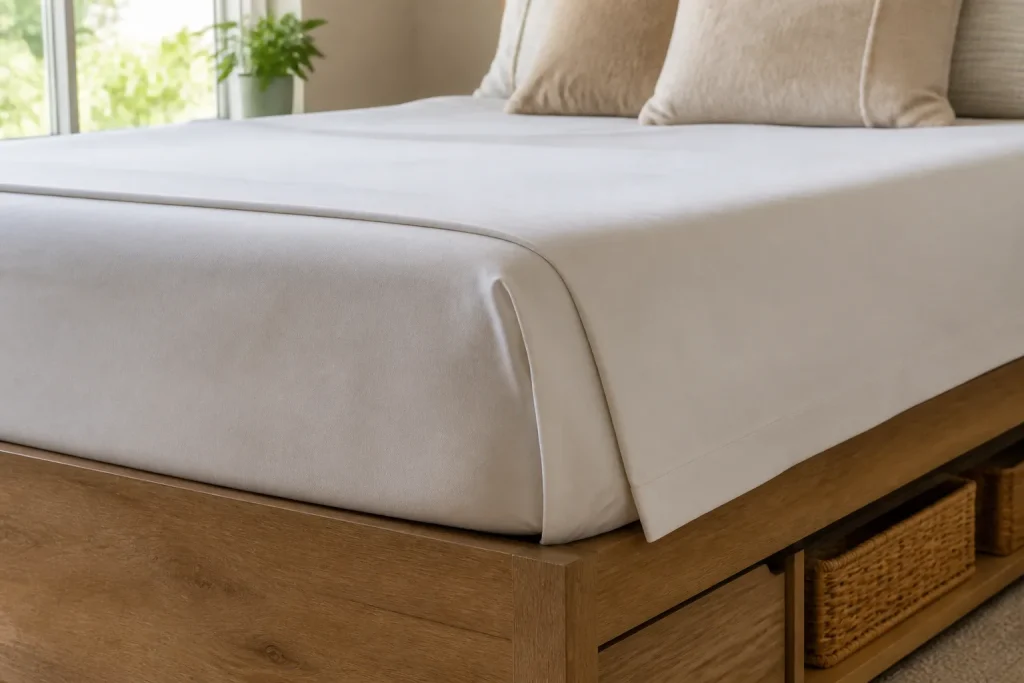
Hospital corners work because they lock the side fabric after the foot is tucked. Smooth the sheet first, tuck the foot under the mattress, fold the side flap down neatly, then tuck the side fabric under the mattress.
Do not start by tucking random side sections. That usually creates wrinkles and weak spots.
- Center the sheet before tucking.
- Tuck the foot end first.
- Fold one corner at a time.
- Smooth wrinkles before adding blankets.
Make Heavy Mattresses Easier
If the mattress is heavy, lift only one section at a time instead of trying to raise a full side. A flat sheet tucking paddle can help push fabric under the edge without straining your fingers.
If making the bed hurts your back or hands, simplify the bedding rather than forcing the same setup every day.
When to Skip the Top Sheet
Some beds are simply hard to make, especially bunks, lofts, and beds against two walls. A washable duvet cover, comforter, or zipper bedding system may be easier to maintain than a separate top sheet.
The best bedding setup is the one you can keep clean and remake consistently.
Tuck a Top Sheet on a Platform Bed Without a Box Spring
A box spring is not required for a top-sheet tuck. Center the sheet so similar amounts hang at the left and right sides, then pull the foot edge straight before tucking it under the mattress. Smooth from the center toward each corner. Fold a triangular flap at one corner, tuck the lower section under the mattress, and fold the flap down before tucking the remaining side fabric. Repeat at the other foot corner.
This hospital-corner sequence works because it creates tension at the foot before the side fabric is tucked. Randomly stuffing the sides first usually leaves slack that works loose when the sleeper moves.
| Symptom | Likely cause | Better fix |
|---|---|---|
| Foot pulls loose | Sheet is too short or not centered | Use a longer top sheet and tuck the foot first. |
| Sides balloon out | Too much loose fabric or no fold | Smooth center-outward and use a hospital corner. |
| Tall footboard blocks access | Limited clearance at the foot | Use a duvet cover or a top sheet with more drop. |
| Bunk is hard to reach | Frame and ladder limit hand access | Use lighter bedding and lift one corner only. |
When the Top Sheet Is Too Short
Measure the mattress depth, including a topper, and compare it with the sheet’s actual dimensions. A label such as “queen” does not guarantee the same drop from every manufacturer. If the sheet cannot reach the foot edge and still leave fabric to tuck, use a longer sheet, a fitted-style top sheet, or a duvet cover. Clips can help a good-fitting sheet but cannot create missing length.
For a tall footboard, tuck the foot before pushing the mattress against the board if the frame permits. Never wedge fabric into a moving mechanism or tie it to rails.
Use Less Bedding on a Bunk or Loft
Upper-bunk bedding is easier to keep tidy when it is light and correctly sized. Avoid bulky layers that pull the top sheet out or hang over a guardrail. Keep the ladder clear and do not tuck fabric around or through the rail. For a child’s bunk, an adult should check the bedding and the mattress-to-rail relationship after making the bed.
If the mattress is very heavy, follow the low-lift method on the companion guide and ask for help when the corner cannot be controlled. Do not add a box spring or extra riser to improve access on a bunk because it may reduce guardrail protection.
Is It Okay Not to Tuck the Top Sheet?
Yes. Tucking is a preference, not a requirement for a healthy bed. Some sleepers sleep better with the foot loose, while others prefer a neat hospital corner. If tucking causes back or hand pain, switch to a duvet, a zippered bedding system, or a top sheet that fits the mattress instead of forcing the mattress up every day.
Related Guides
For heavy mattress tricks, read how to tuck sheets under a heavy mattress. For sheet size questions, see queen sheets on a Full XL bed.
FAQ
Why does my top sheet keep coming untucked?
Common reasons include a short sheet, thick mattress, weak foot tuck, slippery bedding, or a sleeper who moves a lot.
Do hospital corners really help?
Yes. They create a cleaner locked fold at the foot corners, which helps the sheet stay in place longer.
Is it okay to stop using a top sheet?
Yes, if you use washable bedding such as a duvet cover or comforter and clean it regularly.