Disclosure: This site may earn a commission if you buy through links on this page or elsewhere on the site. Always check the manufacturer instructions and current safety guidance before buying, building, modifying, or using bunk beds or loft beds.
Queen size loft beds for adults can solve real space problems, but they are not a casual purchase. The right frame needs more than a queen mattress footprint. It must handle adult use, fit your ceiling height, allow safe access, and stay stable under daily movement.
This guide focuses on the checks that matter before you buy: manufacturer load ratings, mattress weight, stair or ladder clearance, frame movement, and whether the bed should be anchored to the wall. The safest choice is the one that fits the room and the people using it, not just the one with the biggest sleep surface.
Table of Contents
Quick Answer
A queen size loft bed for adults is a good fit only if the frame is specifically rated for adult use, your ceiling height leaves enough clearance above the mattress, and the access method is comfortable and safe for daily use. Check the total weight load, mattress thickness, room layout, and whether anchoring is recommended by the manufacturer.
| Decision | Practical guidance |
|---|---|
| Load rating | Use the manufacturer’s total capacity, not the mattress size alone. Add body weight, mattress weight, bedding, and any stored items. |
| Ceiling clearance | Measure finished floor to ceiling and subtract mattress thickness and the rail height you need. Leave enough room to sit up without contacting the ceiling. |
| Access | Choose stairs if you want easier adult use and more stable climbing; choose a ladder only if the room is tight and daily use is light. |
| Frame movement | Expect some motion in any elevated bed. Look for thick posts, cross-bracing, and tight hardware, and recheck fasteners after assembly. |
| Anchoring | Ask whether wall anchoring is required, recommended, or optional. Follow the maker’s instructions and confirm your wall type before drilling. |
What makes a queen-size loft bed different for adults
A queen loft bed for adults is a higher-stakes version of a standard loft frame. The bed is wider, the load is greater, and the user often expects it to serve as an everyday sleep surface, not a temporary guest setup. That means construction quality and room fit matter more than style.
Adult buyers should treat the frame like a piece of structural furniture. Look for published weight ratings, material thickness, connection points, and whether the frame is designed for a queen mattress specifically or for a mattress platform that also needs slats or support boards.
- Confirm that the listing says adult, heavy-duty, or full-capacity use.
- Check whether the queen mattress sits on slats, a platform, or a mesh deck.
- Look for a stated maximum mattress thickness if the rails are short.
- Avoid assuming a “queen” label means it is suitable for all adult sleepers.
Check the load rating, not just the bed size
The most important number is the manufacturer’s load rating. That rating should cover all expected use on the frame, including the sleepers, mattress, bedding, and any items stored on the loft surface or built-in shelves. A queen mattress may fit the platform, but fit is not the same as capacity.
For a safer comparison, ask what the bed is rated for in total pounds and whether that number assumes one sleeper or two. If the rating is unclear, treat it as a warning sign. For adult use, a conservative margin is better than a frame that is only barely adequate.
| Question to ask | Why it matters |
|---|---|
| What is the total load rating? | Tells you the maximum intended weight for the frame, not just the mattress size. |
| Does the rating include sleepers plus mattress? | Some makers publish ratings for the frame only; others include the full sleeping setup. |
| Is it rated for everyday adult use? | Guest-only or occasional-use frames may not be ideal for nightly sleeping. |
| What is the warranty coverage for structural parts? | Helps show how confident the maker is in the frame design. |
Measure ceiling height, sitting clearance, and stair clearance
Queen loft beds can look fine in photos and still feel cramped in a real room. Start with finished floor-to-ceiling height. Then measure the intended mattress thickness, the platform height, and how much room you want above the mattress. Adults generally need enough space to sit up without contacting the ceiling.
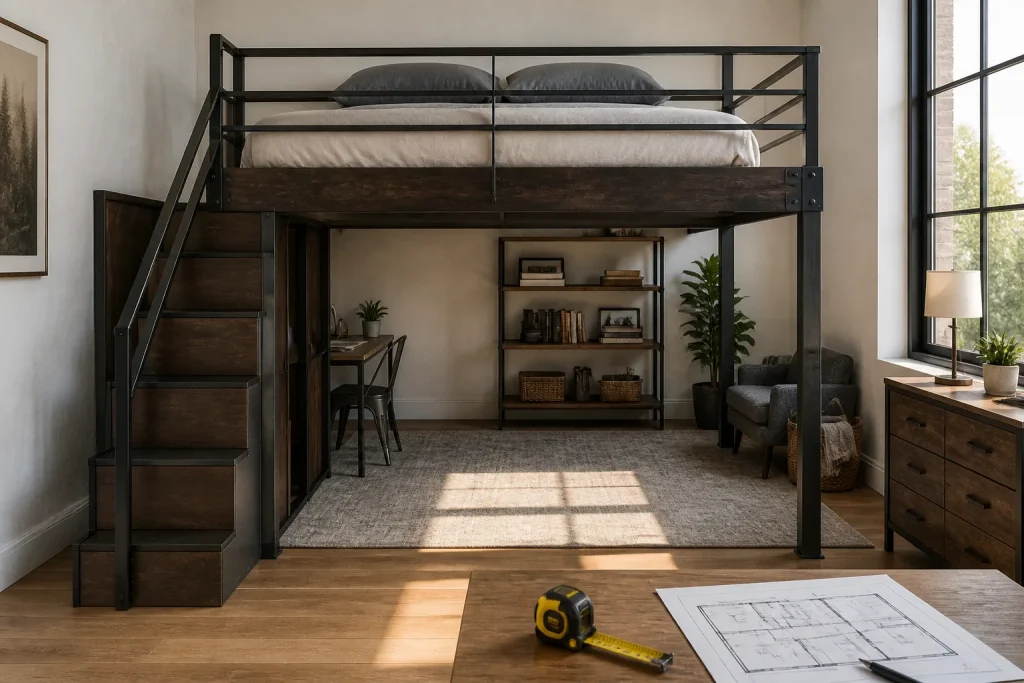
If the bed uses stairs, include the stair footprint in your planning. Stairs often make the bed more comfortable to use, but they take more floor space and may affect where doors, dressers, or desks can go. A ladder saves space, but it is less forgiving for repeated adult use, especially if the bed is high.
A simple measuring checklist
Measure floor to ceiling in at least two spots, especially in older homes where ceilings may be uneven. Measure the mattress thickness you plan to use, then confirm the platform height from the floor to the mattress support surface. Add rail height so you know the true sleep height.
Also measure the swing of nearby doors and closet doors, the path to the bed, and the space needed to climb in and out without bumping a wall or light fixture. If you plan to place the bed over a desk or storage area, check headroom for the lower zone as well.
Why mattress weight and thickness matter
With loft beds, the mattress is part of the engineering. A thick or heavy queen mattress can raise the sleep surface higher than expected and reduce safety clearance at the ceiling. It can also add meaningful weight to the platform, especially if the frame is already near its capacity.
Before buying, confirm the manufacturer’s allowed mattress thickness and weight range. Foam, hybrid, and innerspring mattresses can behave differently on a loft platform. A mattress that is too thick may reduce rail protection; one that is too thin may be uncomfortable on slats or create a less secure feel.
- Check the maximum mattress thickness allowed by the frame.
- Ask whether a box spring is excluded; most loft designs do not use one.
- Consider the mattress weight along with the sleeper’s weight.
- Use a mattress that keeps the top of the sleep surface within the maker’s recommended guardrail height.
Frame movement, anchoring, and everyday stability
All elevated beds will have some movement, but the amount should be limited by good design and proper assembly. Slight flex under load is normal; swaying, creaking, or shifting is not something to ignore. Adult users should look for thick posts, secure corner joints, center support, and cross-bracing where applicable.
Ask whether the bed must be anchored to the wall. Some frames are designed to stand alone, while others are more stable when attached to wall studs. If anchoring is recommended, confirm your wall type, stud locations, and whether the wall can support the fasteners specified by the manufacturer. Do not substitute hardware without checking the instructions.
Signs the frame may not be a good fit
If the product page avoids publishing a weight rating, uses vague phrases like “sturdy” without details, or shows a very tall frame with thin posts and minimal bracing, it may be better to keep shopping. A queen loft bed for adults should feel intentionally built, not adapted from a lighter-duty design.
Pay attention to how the platform is supported. Wide spans need more than a few thin slats if the bed is meant for regular adult sleeping. More contact points usually mean better mattress support and less long-term stress on the frame.
Realistic buyer tradeoffs: queen loft versus other adult bed options
A queen loft bed creates usable space underneath, which is the main reason adults choose it. That lower zone can hold a desk, dresser, seating, or storage. The tradeoff is that the bed becomes harder to access, harder to make, and less forgiving in a low-ceiling room. Cleaning around the frame can also be more involved.
For some buyers, a lower-profile platform bed with storage nearby may be the better choice. For others, especially in studio apartments or shared rooms, the vertical space from a loft bed is worth the extra planning. The right decision depends on whether you need floor space more than you need a traditional bedroom feel.
- Choose a loft bed if you need usable space under the mattress every day.
- Choose stairs over a ladder if comfort and repeated access matter more than saving a few square feet.
- Choose a lower frame if your ceiling is short, your mattress is thick, or you want easier bedding changes.
- Choose storage elsewhere if you do not have room for the footprint of stair access.
How to compare queen-size loft beds before ordering
A careful comparison usually comes down to five things: capacity, clearance, access, stability, and support. Two frames can both say “queen size,” but one may be better suited to a single adult, while another is built for heavier daily use. Read the fine print and compare the measurements, not just the photos.
If you are shopping on a site like lshapedbunkbed.com, use the product dimensions, assembly notes, and ceiling-height guidance together. A queen loft bed that fits on paper can still fail in the room if the stairs block a door or the mattress leaves too little headroom. Conservative planning avoids expensive returns and awkward assembly problems.
| Comparison point | What to prefer | |
|---|---|---|
| Higher load rating | Prefer a clearly stated adult-capacity frame over a decorative loft design. | |
| Clear mattress limits | Prefer a frame that lists allowed thickness and support type. | |
| Stairs or ladder | Prefer stairs for frequent adult use; ladder only if space is tight. | |
| Anchoring guidance | Prefer products with explicit wall-anchoring instructions or a clear standalone design. | |
| Published dimensions | Prefer full dimension drawings over simplified marketing photos. |
Before you buy: a conservative checklist
Use this checklist before placing an order. If the answer to any of these is unclear, ask the seller for the specification in writing. That is especially important for adult loft beds, where guesswork can affect safety and comfort.
Measure the room, confirm the capacity, match the mattress, and think through how you will climb, sit, and make the bed. A queen-size loft bed for adults should make the room easier to use, not harder.
- Finished floor-to-ceiling height measured in more than one spot
- Mattress thickness and weight confirmed
- Total load rating published by the manufacturer
- Stair or ladder footprint fits the room
- Anchoring instructions reviewed
- Nearby door, window, and ceiling fixture clearances checked
- Assembly plan includes hardware tightening after settling-in period
Related Guides
Keep planning with loft beds for 8-foot ceilings, ceiling height for bunk beds, L-shaped bed guide.
FAQ
Is a queen size loft bed safe for adults?
It can be, if the frame is specifically built and rated for adult use, the mattress fits the rail and clearance requirements, and the bed is assembled and installed exactly as directed.
Do queen loft beds need to be anchored to the wall?
Not always, but some manufacturers recommend or require anchoring for stability. Follow the product instructions and confirm that your wall type can accept the specified fasteners.
What mattress thickness works best on a queen loft bed?
Use the thickness range listed by the manufacturer. The best choice is usually the thickest mattress that still leaves safe headroom and keeps the guardrail effective.
Are stairs better than a ladder for adult loft beds?
Stairs are usually better for frequent adult use because they are easier to climb and often feel more stable. A ladder saves space but is less comfortable for daily access.
Can I put storage under a queen loft bed?
Yes, if the lower area is planned carefully and the bed has enough clearance. Keep storage arrangements from blocking access, airflow, or any anchoring points.