Disclosure: This site may earn a commission if you buy through links on this page or elsewhere on the site. For bunk beds, always check the manufacturer instructions and current safety guidance before building, modifying, or using any bed.
The right ceiling height for a bunk bed depends on more than the frame. You need to know the mattress thickness, top bunk height, guardrail height, sleeper size, and whether the ceiling has a fan, slope, beam, or low fixture.
A bunk bed that physically fits can still feel unsafe or uncomfortable if the upper sleeper cannot sit, climb, or change bedding without hitting the ceiling.
Table of Contents
Quick Answer
There is no single perfect ceiling height for every bunk bed. Measure from the top of the upper mattress to the ceiling and confirm the sleeper has enough room to sit and move. Also check that the mattress does not reduce guardrail protection and that no ceiling fan or fixture is within reach of the upper bunk.
| Clearance question | What to do |
|---|---|
| Can the sleeper sit up? | Measure seated height above the mattress. |
| Is the mattress too thick? | Compare to the manufacturer limit. |
| Is there a ceiling fan? | Do not place the upper bunk within reach. |
| Is the ceiling sloped? | Measure at pillow, ladder, and foot areas. |
| Is bedding hard to change? | Leave room for adult access. |
Measure From the Mattress Top
Frame diagrams often show the bed height, but the sleeper uses the mattress surface. Measure from the top of the actual mattress to the ceiling. Include toppers if they will stay on the bed.
For kids, remember they grow. A clearance that feels fine today may not work next year.
Guardrail Height Is Part of the Calculation
CPSC guidance says bunk beds with mattress foundations more than 30 inches above the floor need guardrails, and guardrails must extend at least 5 inches above the top of the mattress. A thick mattress can reduce that effective rail height.
Do not solve headroom problems by removing or lowering guardrails.
- Use a mattress thickness allowed by the bed manual.
- Keep guardrails installed on the upper bunk.
- Avoid tall toppers on top bunks.
- Check rail height after the bedding is in place.
Ceiling Fans, Beams, and Slopes
Ceiling fans and low beams can make a room unsuitable for an upper bunk even if the ceiling is otherwise tall enough. Sloped ceilings need several measurements because clearance changes across the bed.
If the ladder or pillow area sits under the lowest ceiling point, consider a low bunk, trundle, or separate beds.
| Room feature | Safer response |
|---|---|
| Ceiling fan | Move bed or remove/replace fan. |
| Sloped ceiling | Place upper bunk under tallest area only if clearance works. |
| Low beam | Avoid upper-bunk sleeping under it. |
| Pendant light | Relocate fixture or choose a lower bed. |
| Very low ceiling | Use trundle, daybed, or low platform beds. |
A Simple Buying Rule
Do not buy the tallest bed that fits. Buy the lowest bed that still gives the room the function you need. Lower bunks are easier to climb, clean, inspect, and use in ordinary bedrooms.
A Simple Bunk-Bed Height Diagram
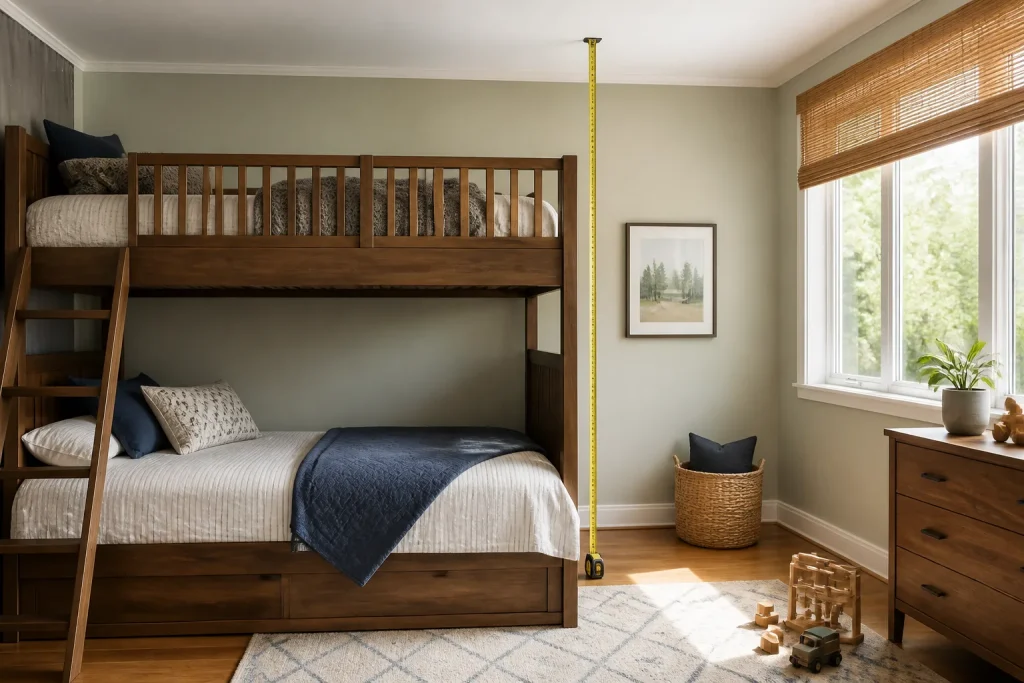
Measure vertically at the actual upper-bunk position. The usable stack is floor to foundation, foundation to mattress top, mattress top to guardrail top, and mattress top to ceiling. Record each value with the exact mattress and topper that will stay on the bed.
Text diagram: ceiling or lowest fixture → usable headroom above the mattress → top of mattress → guardrail (which must remain protective) → mattress foundation → floor. A frame listing that gives only overall height does not answer the headroom question.
| Room condition | What the measurement should decide |
|---|---|
| 7-foot ceiling | Whether a low bunk leaves usable upper headroom; a lower bed may be better. |
| 8-foot ceiling | Whether low or mid-height models fit the seated sleeper and mattress limit. |
| 10-foot ceiling | Whether a taller model still has a clear ladder, rail, and fixture zone. |
| Sloped ceiling | The lowest point over the pillow, ladder, and foot, not the room average. |
| Ceiling fan or pendant | Whether the upper bunk must move or be avoided entirely. |
Do Not Trade Guardrail Height for Headroom
CPSC guidance says a bunk bed with a mattress foundation more than 30 inches above the floor needs upper guardrails, and the top of the rail must be at least 5 inches above the top of the thickest mattress specified by the manufacturer. That is a guardrail relationship, not a universal ceiling-clearance number.
A thicker mattress or topper raises the sleeping surface and reduces the effective rail height. Use the model’s maximum mattress thickness, keep the rails installed, and do not lower or remove them to make a tall sleeper fit.
Queen Bunks, Adult Bunks, and Tall Rooms
A queen mattress is wider and heavier than a twin, so a queen bunk needs a frame specifically designed and rated for that size. In a 10-foot room, extra ceiling height does not make a twin-rated frame suitable for a queen or adult sleeper. Check the exact frame, foundation, ladder, rail, and weight instructions.
For adult use, measure the sleeper seated on the intended mattress and include bedding, a headboard, and any slope or fixture. A custom bunk with a queen upper bed or an unusually tall ceiling should receive professional structural review.
When Seven Feet or a Fixture Means “Choose Lower”
A 7-foot ceiling may work only with a low configuration that leaves the sleeper usable headroom and preserves the rail. If the sleeper must crouch, the mattress would exceed the model limit, or the ladder landing is blocked, choose a lower bed or separate beds. A ceiling fan within reach is a reason to change the layout, not to rely on the fan being turned off at bedtime.
Measure the room after the bed is assembled and again after adding the real mattress. Recheck after moving the bed or changing the mattress, topper, or fixture.
Primary References
- CPSC bunk bed requirements summary
- 16 CFR Part 1513 children’s bunk bed requirements
- IKEA official bed-frame guide
Related Guides
For 8-foot rooms, read loft beds for 8-foot ceilings. For sloped rooms, see bunks under sloped ceilings.
FAQ
Can a bunk bed work with an 8-foot ceiling?
Often yes, but choose a lower frame and verify mattress-to-ceiling clearance before buying.
Do ceiling fans make bunk beds unsafe?
They can. Do not place the upper bunk where a sleeper can reach the fan blades or pull chain.
Should I use a thinner mattress on the top bunk?
Use the mattress thickness specified by the manufacturer. Thinner can help rail height, but it still needs to support the sleeper properly.